
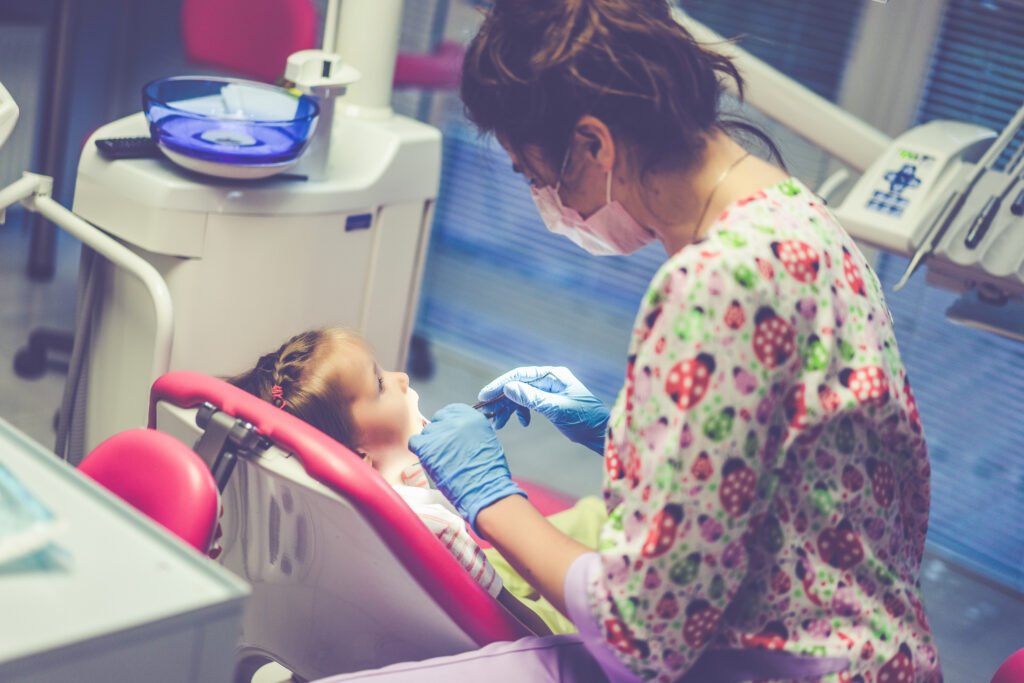
You may have been diligently brushing your child's teeth since their first teeth came in; however, it's natural to wonder exactly what works best when it comes to cavities. Fluoride is one of the most researched and well-understood methods for preventing cavities. At our clinic in Kemerburgaz, one of the most frequent questions from families is whether fluoride is truly safe for children. In this article, we'll address what fluoride does, how it's used in the clinic and at home, and discuss concerns like fluorosis in a balanced way.
How does fluoride strengthen enamel and prevent cavities?
Tooth decay begins when bacteria in the mouth produce acids as they break down sugary and starchy foods. These acids weaken the surface of tooth enamel by dissolving minerals (calcium and phosphate); this is called demineralization. Saliva tries to repair some of this loss throughout the day, but frequent consumption of sugary foods upsets the balance, favoring decay.
Fluoride helps in two ways at this point. First, it accelerates the remineralization process of the enamel, and the resulting new surface is more resistant to acid than the original enamel. Second, it somewhat reduces the capacity of the bacteria that cause decay to produce acid. Therefore, fluoride both makes the tooth more resistant and lessens the attack. This effect is particularly noticeable in newly erupted primary and permanent teeth whose enamel is not yet fully mature; therefore, childhood is when fluoride is most beneficial.
Fluoride application in the clinic: varnish and gel.
In addition to home care, concentrated fluoride treatment applied in the clinic provides an extra layer of protection for children at risk of cavities. The most common method we use is fluoride varnish. Varnish is a rapidly hardening layer applied to cleaned tooth surfaces with a fine brush. Application takes only a few minutes, is painless, and is well tolerated even in young children. The varnish adheres to the tooth, allowing the fluoride to be released slowly over several hours.
Another option is fluoride gel; it is usually applied by placing a spoon (tray) in the mouth and holding it there for a few minutes, and is often preferred for slightly older children who can control their saliva. We will decide together which method is appropriate, taking into account the child's age, cooperation, and risk of cavities. Generally, avoiding eating and drinking for a short period after application is sufficient; this period is shorter with varnishes. These procedures are a natural part of the in-office examination and are not a guarantee of preventing cavities on their own, but rather a step that complements regular brushing and a balanced diet.
The frequency of fluoride application in the clinic is determined according to the child's risk of cavities. While routine check-ups every six months are usually sufficient for children with average risk, more frequent applications may be recommended for children with a history of cavities, those wearing orthodontic braces, or those who have difficulty brushing their teeth. We make this decision individually for each child, based on the examination findings. Regular check-ups also provide an opportunity to detect cavities in their early stages and update preventive measures when necessary; a cavity caught early can often be stopped with preventive measures and prevented from needing fillings.
Fluoride toothpaste at home: the right amount according to age.
The basis of daily protection is regular brushing at home with fluoride toothpaste. The key here is that both the amount of toothpaste containing fluoride is appropriate for the patient's age. Current recommendations can be summarized as follows:
- 0-3 years old: Starting from the moment the first tooth erupts, use fluoride toothpaste. grain of rice Use a small amount (a very thin swab).
- 3-6 years old: pea That much fluoride toothpaste is sufficient.
- Ages 6 and up: Once the child learns to spit, a standard amount of fluoride toothpaste can be used.
Brushing should be done twice a day, in the morning and especially before bedtime; avoiding eating or drinking after brushing at night enhances the effect of fluoride. Since young children tend to swallow toothpaste, it is recommended that brushing be done or supervised by an adult until at least the age of six or seven. After brushing, it is sufficient for the child to spit out any excess toothpaste; rinsing the mouth with plenty of water is not necessary as it shortens the time the fluoride remains on the tooth surface.
Concerns about fluorosis and the safety of fluoride.
The question most families wonder about is whether too much fluoride is harmful. This concern is called dental fluorosis. Fluorosis is a change in the enamel that can occur if teeth are exposed to excessive amounts of fluoride for a long period while they are developing (up to about eight years of age). It usually appears as very faint white spots or lines. Most cases of fluorosis seen in the general population are so mild that they are barely noticeable, even aesthetically, and do not impair the health or function of the tooth.
The important point is that fluorosis is associated with exceeding the correct amounts. In other words, the problem isn't fluoride itself, but its uncontrolled and excessive use. Adhering to age-appropriate toothpaste dosages, taking care not to swallow toothpaste, and using fluoride supplements in childhood only with a dentist's recommendation minimizes the risk. Varnishes and gels applied in the clinic are considered safe when used correctly, as they are given in controlled doses and under supervision. In short, fluoride, when used in rational amounts, is a method whose benefits far outweigh its risks.
Fissure sealants and the right protection plan for your child.
Fluoride is particularly effective in protecting the smooth surfaces and interdental spaces of teeth; however, the deep grooves and ridges (fissures) on the chewing surfaces of the back teeth (molars) may not be completely cleaned by brushing, and cavities can develop in these areas. Fissure sealants are thin, protective filling layers applied to these chewing surfaces; they seal the grooves, making it more difficult for food particles and bacteria to settle.
Sealants, usually applied shortly after permanent molars erupt, are painless and completed in a single session. Fluoride and fissure sealants, when used together, create two complementary protective layers: fluoride strengthens the enamel overall, while the sealant physically covers the areas at highest risk. We will determine together which combination is suitable for your child, taking into account their caries history and tooth structure.
The benefit of fluoride comes not from a single application, but from being part of a consistent whole. The most effective results are achieved by combining twice-daily brushing with age-appropriate fluoride toothpaste at home, a balanced diet, reduced sugary snacking, regular check-ups at the clinic, and the use of fluoride varnish and fissure sealants when necessary. None of these steps alone provides perfect protection; however, when applied together, they significantly reduce the risk of cavities.
Since every child's oral structure, eating habits, and history of cavities are different, the preventive plan should also be personalized. During an examination, we assess the condition of the teeth and discuss together which measures are truly necessary for your child. We recommend that families from Kemerburgaz, Göktürk, Sarıyer, Arnavutköy, Bahçeköy, and Zekeriyaköy not miss regular check-up appointments to protect their children's dental health in the long term, and that they feel free to ask us any questions. Healthy habits established at an early age form the foundation for strong teeth that will last a lifetime.
Frequently Asked Questions
Will fluoride treatment harm my child?
When used in age-appropriate amounts and under the supervision of a dentist, fluoride is safe; the problem is not fluoride itself, but its uncontrolled and excessive use.
At what age can I start using fluoride toothpaste?
You can start using it from the moment the first tooth erupts; a rice-grain-sized amount of toothpaste is sufficient for children aged 0-3, and a pea-sized amount for children aged 3-6.
How often should fluoride be applied in a clinical setting?
For most children, routine checkups every six months are sufficient; it may be recommended more frequently for children at high risk of cavities.
Is fissure sealant alone sufficient as an alternative to fluoride?
No; they complement each other. Fluoride generally strengthens enamel, while fissure sealants physically protect the deep chewing surfaces of back teeth.
For your child's preventive dental care Göktürk and its surroundings We can evaluate you at our clinic. Pediatric dentistry You can get information about it or You can contact us to schedule an appointment..