
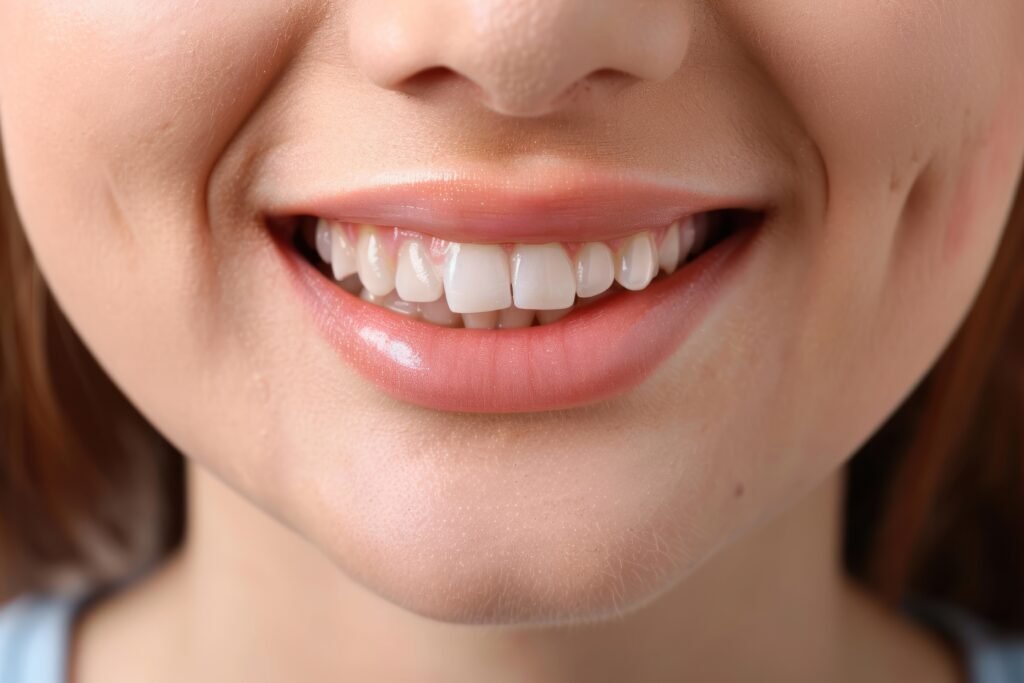
The gap between the front teeth is something many of our patients notice first in the mirror but don't know what to do about. In clinical terms, this is called diastema, and it most commonly occurs between the two upper central incisors. For some, this gap is a personality trait, while for others it's a problem that makes them feel self-conscious when smiling. To determine the right approach, it's necessary to first understand why the gap has formed, because closing it without knowing the cause is often not permanent.
What causes diastema?
Interdental spacing isn't caused by a single factor; therefore, during examination, we first identify the root cause. One of the most common causes is a mismatch between tooth and jaw size: when teeth are relatively small and the jawbone is relatively wide, natural gaps remain between the teeth. This is often a genetic condition, and the person lives with this spacing from childhood.
The second common cause is an upper lip frenulum. When the connective tissue called the frenulum, which connects the upper lip to the gum, becomes thicker or extends excessively downwards, reaching between the two front teeth and physically preventing them from coming together. In this case, simply covering the gap with a crown or bonding is misleading; unless the connective tissue is released, the gap may reopen over time.
Other important reasons include:
- Missing tooth: A congenitally missing tooth (especially the lateral incisors) or a tooth extracted later in life can cause neighboring teeth to shift and gaps to form.
- Gum disease: Advanced gum inflammation erodes the bone surrounding the teeth, causing them to fan out and lose their stability. A significant proportion of diastemas that develop in adulthood originate from this condition.
- Habits: Prolonged thumb-sucking or tongue-pushing habits in childhood can push developing teeth forward, creating gaps.
As you can see, diastema is not limited to aesthetics; sometimes it indicates an underlying gum health problem that needs to be treated. Therefore, the first step is always an accurate diagnosis.
Diastema closure options
There is no single right way to close a gap; the choice depends on the size of the gap, its cause, the health of the teeth, and the patient's expectations. Below, I explain the methods we most frequently use at our clinic in Kemerburgaz and when each is appropriate.
Composite bonding
Bonding is a procedure where tooth-colored composite resin is added to the edges of the tooth to close the gap. It is completed in a single session, often does not require tooth preparation, and is reversible. It is our preferred method for small to medium-sized gaps, especially in younger patients. It is also more affordable than other options. The disadvantage is that composite can change color over time and is not as durable as porcelain; polishing or renewal may be necessary every few years.
Porcelain veneers (leaf coating)
Veneers are thin porcelain sheets bonded to the front surface of a tooth. They are a strong option when you want to close gaps as well as change the color, shape, and symmetry of the tooth. They are superior to bonding in terms of color retention and natural light transmission. However, they usually require only a limited amount of tooth preparation and are irreversible; therefore, we recommend them only when the tooth is healthy and you don't rush the decision. In cases of large gaps, veneers alone can make teeth appear disproportionately wide, so they are sometimes planned in conjunction with orthodontics.
Orthodontics (braces and clear aligners)
If the gap is caused by the position of the teeth, the healthiest approach is to move them without touching the teeth at all. Classic brace treatment or clear aligners physically bring the teeth closer together, effectively eliminating the gap. Clear aligners are a comfortable alternative for adults with aesthetic concerns. Orthodontics is especially valuable in cases where multiple gaps exist or are accompanied by malocclusion. The disadvantage is the duration: treatment can take months. However, in the end, the teeth remain in their natural position.
Which method for which situation?
To give a general overview: if there is a narrow gap and healthy teeth, bonding is a quick and conservative solution. If a change in color and shape is desired along with the gap, laminate veneers are preferred. If the gap is due to the position of the teeth, or if there are multiple gaps or bite problems, orthodontics is preferred. If there is an underlying frenulum problem, the connective tissue is freed with a minor surgical procedure (frenectomy), and then closure is performed. In gaps due to missing teeth, prosthetic solutions such as implants or bridges come into play.
In practice, these methods are often complementary rather than alternatives to each other. For example, in a large diastema, the gap is largely closed with orthodontics first, and any remaining minor discrepancies are completed with bonding. Proper planning aims to achieve the most lasting result with minimal wear and tear on the tooth.
Relapse and reinforcement: the key to persistence.
The most overlooked aspect of diastema treatment is that sometimes closing the gap isn't enough. Especially in gaps closed with orthodontic treatment, there's a tendency for the teeth to return to their original positions (relapse). To prevent this, retention is applied at the end of treatment: a thin wire is attached to the back of the teeth or a clear aligner is provided for nighttime use. If this retention phase is skipped, the results of months of treatment can be lost quickly.
The same principle applies to frenulum-related gaps; in closures performed without correcting the connective tissue, the gap may reopen. In diastemas due to periodontal disease, it is essential to first treat the inflammation and maintain regular care; otherwise, new gaps will form as bone loss continues. In short, a lasting result depends not only on the correct method but also on resolving the underlying cause and on follow-up after treatment.
If you are bothered by gaps between your teeth, the first step is not to determine which method is suitable, but to identify why the gap has formed. For our patients in and around Kemerburgaz, Göktürk, Sarıyer, Arnavutköy, Bahçeköy, and Zekeriyaköy, after examination, we offer a plan that provides the most lasting result with minimal intervention to their teeth.
Frequently Asked Questions
Is closing a diastema a painful procedure?
Bonding and laminate applications are generally painless; often anesthesia isn't even necessary. In orthodontic treatment, however, mild sensitivity lasting a few days is normal as teeth move.
How long does interdental space treatment take?
Bonding is completed in a single session, usually within an hour. Veneers require several sessions. Orthodontics, on the other hand, can take anywhere from a few months to a year, depending on the size of the gap.
Can the closed gap be reopened?
It can reopen if the cause is not resolved. Especially after orthodontic treatment, retention and the resolution of frenulum or gum problems significantly reduce the risk of recurrence.
Should I be concerned about the gap between my child's front teeth?
During the primary and mixed dentition periods, the gap between the front teeth is often temporary and closes as the adjacent teeth erupt. However, it is recommended to have it monitored by a dentist to prevent it from becoming permanent.
Let's discuss the most suitable method for your interdental space. Kemerburgaz and its surroundings We can evaluate you at our clinic. Smile Design You can get information about it or You can contact us to schedule an appointment..