
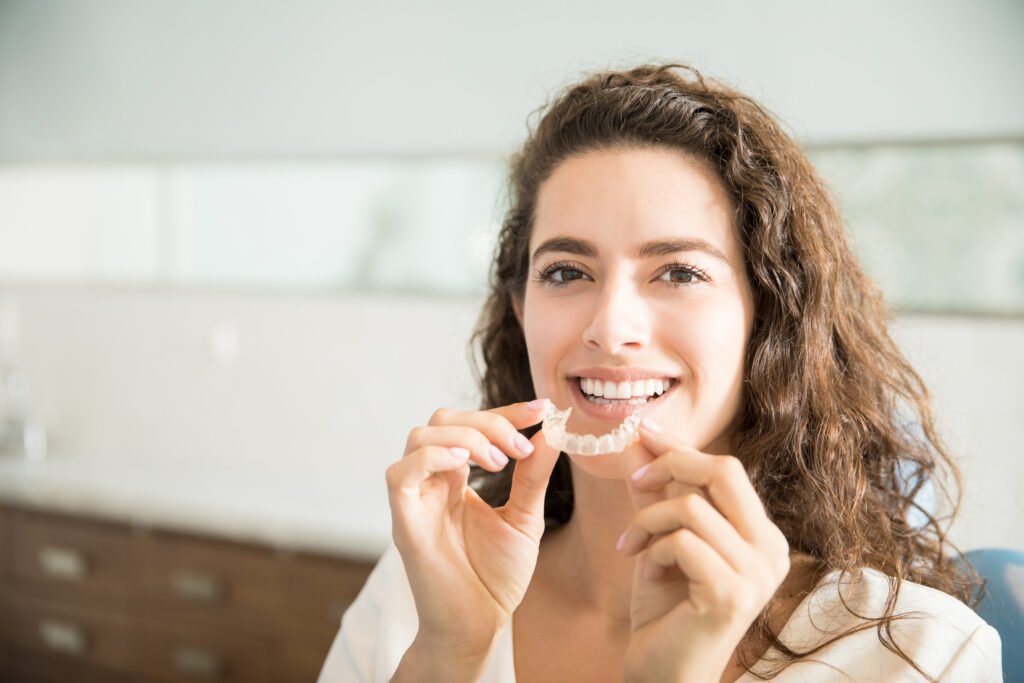
After months, often up to two years, of braces or clear aligners, it's satisfying to see your teeth aligned properly. However, we prefer to tell our patients from the outset that orthodontic treatment is actually a two-stage process: moving the teeth and maintaining that new position. If the second stage is skipped, the effort expended in the first stage is wasted. Retention, or the use of retainers, is not just a fancy addition to the treatment, but a component that determines the permanence of the result.
Why do teeth tend to return to their original position?
A tooth is not directly attached to the jawbone; it is suspended by elastic fibers called the periodontal ligament surrounding its root. When the tooth is moved to its new position by orthodontic force, the bone reshapes itself, but these fibers retain their memory for a long time. The moment the brackets are removed, the tooth tends to retract partially, like a taut spring. This is called relapse.
Fibers are not the only factor that fuels relapse. Lip and tongue pressure, chewing forces, eruption pressure of wisdom teeth, and ongoing natural changes in the jaw with age gently push teeth throughout life. Crowding, especially in the lower front teeth, increases with age, even in untreated individuals. Therefore, retention supports not only the treatment but also the tooth's resistance to the natural aging process. The first six to twelve months are the period when relapse is most rapid; adhering to retention during this period determines the overall outcome.
The initial condition before treatment also determines the tendency for relapse. If significantly rotated teeth, closed gum spaces, and severe crowding have been corrected, the memory of these areas is stronger and requires a longer, more disciplined retention period. Similarly, in a treatment completed during the growth period, retention is particularly important until jaw development is complete. Therefore, we plan the retention protocol individually for each patient, not as a standard procedure.
Two types of reinforcers: fixed wire and movable plate.
Reinforcers are basically divided into two groups, and in most cases we recommend using both together because each serves a different purpose.
Fixed reinforcer (lingual wire): It is a thin, flexible wire usually bonded to the back surface of the upper and lower front teeth, on the side where the tongue touches. It is invisible from the outside and functions day and night without the patient needing to remove or reinsert it. Its biggest advantage is that it is not dependent on user discipline; the wire is still there even if the patient forgets. We particularly prefer it for lower front teeth, which have a high tendency for relapse. The disadvantage is that it requires more meticulous cleaning and a connection point may break over time.
Movable reinforcer (clear plate): It is a removable, clear aligner that fits the arch of the teeth perfectly. It is aesthetically pleasing, easy to clean, and holds the entire set of teeth together. Success here depends entirely on discipline in use; relapse is inevitable in patients who do not wear the aligner. Classic wire retainers (Hawley type) also fall into this group and are more durable, but the metal part is visible in the front area.
In practice, the safest approach is usually this: fixed braces on the upper and lower front teeth, with clear aligners for nighttime use. This provides both protection against user error and support that covers the entire arch. Which combination is right for you depends on the degree of crowding before treatment and your dental structure.
How long should it be worn?
Here's where patients most often get the wrong idea: reinforcement isn't a temporary phase lasting a few months. Once treatment is complete, patients are usually asked to wear the clear aligner for extended periods, including during the day, for the first few months. After that, they switch to nighttime use only. The fixed brace, however, can remain in place for years, in most cases indefinitely.
The current approach is clear: if you want your teeth to stay straight, night guard use is for an indefinite period, and for most people, a lifetime. This may sound like a lot, but a guard worn a few nights a week is a very small burden compared to a second treatment years later. The risk of relapse does not decrease with age; it only slows down. Therefore, the retainer should be seen not as a burden, but as low-cost insurance for the results you achieve.
How to reduce the frequency of use is also important and should not be decided on your own. Initially worn every night, the aligner is gradually thinned out over months as the tooth position stabilizes; however, this transition is assessed during our check-ups. If you feel a slight tightness or difficulty when putting on the aligner one morning, this is an early sign that your teeth are starting to shift and means you need to increase the frequency of use. If the aligner still fits comfortably, the current alignment is being maintained. This simple feedback allows the reinforcer to act as an indicator, informing you of the condition of your teeth.
What should be done in case of cleaning or breakage?
Plaque and tartar buildup behind fixed braces can lead to gum inflammation and tartar formation on the front teeth. This area needs to be cleaned regularly with an interdental brush and super floss or floss porters; it's essential to clean between each tooth by passing floss underneath the braces. Professional dental cleanings every six months help keep this buildup under control.
The clear aligner should be cleaned each morning with a soft brush and cold water, using an aligner cleaning tablet if necessary. Hot water should never be used as it will deform the aligner. When not in use, the aligner should be stored in its dry, airy case; it should not be wrapped in a napkin and put in a pocket, as this is the number one reason for aligners being wasted.
If a connection point breaks in a fixed brace, there's no need to panic, but waiting is also not the right approach. While the broken wire continues to hold, the freed tooth will begin to shift silently; this can become difficult to reverse within a few weeks. Therefore, an appointment should be made as soon as the break is noticed. If the clear aligner breaks, gets lost, or no longer fits, you should be informed immediately; continue wearing your old aligner, if you have one, until a new impression is taken. Even a brief interruption can lead to noticeable shifting within a month.
The consequence of neglecting reinforcement
The outcome is often the same for patients who discontinue retainers: initially subtle, imperceptible shifts, followed by crowding and malocclusion reappearing, particularly in the lower front teeth. Because this regression progresses slowly, the patient usually only notices it after it's too late, months or even years later. At that point, the only solution is often a new orthodontic treatment; meaning time, cost, and effort are invested once again.
However, retention is the most economical and simplest way to maintain a completed treatment. We always tell our patients from Kemerburgaz, Göktürk, Sarıyer, Arnavutköy, Bahçeköy, and Zekeriyaköy: if straightening your teeth is an achievement, maintaining that achievement is the real lasting gain. If you have the slightest doubt about your retainer, if you feel the wire is loosening, or if your aligner no longer fits comfortably, contact us; a small intervention can prevent a major relapse from the start.
Frequently Asked Questions
If I stop wearing retainers, will my teeth really return to their original state?
Yes, the risk of relapse is high, especially in the first year, and crowding in the lower front teeth may return over time; this usually requires new treatment.
Which is better: fixed wire or clear plate?
They both have different advantages; in most cases, fixed braces for the front teeth are recommended along with clear aligners for nighttime use, because one works independently of the user's discipline, while the other supports the entire arch.
How long should I use the reinforcer?
Fixed braces may remain indefinitely in most cases; clear aligners, on the other hand, are recommended for an indefinite period, initially only at night after the first few months, and in most people, for life.
My main string is broken or my record is cracked, what should I do?
Since the freed tooth may start to shift quickly, schedule an appointment immediately; if possible, continue wearing your current aligner until a new impression is taken.
To make your orthodontic results permanent. Göktürk and its surroundings We can evaluate you at our clinic. Smile Design You can get information about it or You can contact us to schedule an appointment..