
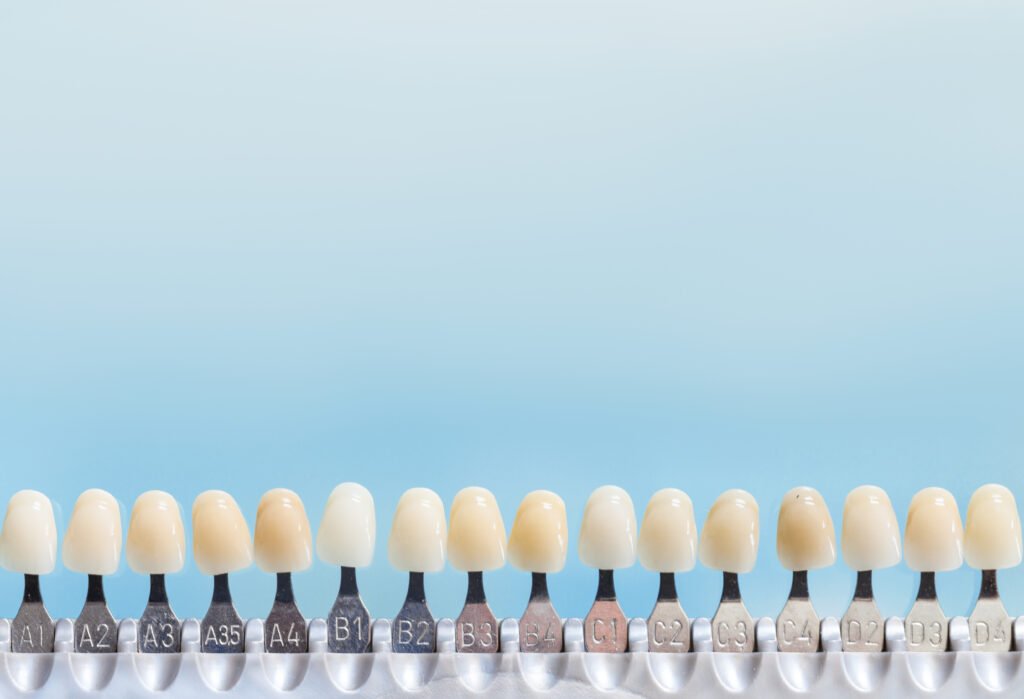
One of the most frequently asked questions by our patients who want to rejuvenate their smile is which veneer material is right for them. Emax and zirconium are two fundamental options in modern aesthetic dentistry; however, due to their different structures, they do not yield the same results in every mouth and on every tooth. At our clinic in Kemerburgaz, when making this decision, we evaluate many variables together, from the light transmittance of the material to the position of the tooth in the mouth, from the patient's chewing habits to their expectations. In this article, we will examine Emax glass ceramic in all its aspects and make a balanced comparison with zirconium.
What is Emax (Glass Ceramic) Coating?
Emax is an aesthetic veneer system made from a glass-ceramic material called lithium disilicate. Unlike classic metal-supported porcelain restorations, it contains no metal substructure. Because the material is entirely ceramic, it exhibits optical properties very similar to the natural behavior of tooth tissue. Emax restorations can be produced using two different methods: by press technique or by milling from a block using CAD/CAM milling machines based on digital measurements.
A significant advantage of lithium disilicate is its ability to offer both sufficient mechanical strength and high aesthetic quality. Because the glass-ceramic structure absorbs and softly diffuses light, the restoration does not appear dull or lifeless. Therefore, Emax is one of our preferred materials, especially in cases where naturalness is a priority.
Light Transmittance and Aesthetic Superiority
A natural tooth reflects some of the light that falls on it, while allowing some to pass through. This is called translucency, or light transmission. This is the most critical reason why a veneer is indistinguishable from a real tooth. Emax's glass-ceramic structure transmits light in a way very similar to natural enamel, resulting in extremely successful aesthetic outcomes. When light passes through the restoration and reflects off the underlying layers, it gives the tooth a vibrant and deep appearance.
This characteristic is particularly important in the front teeth, which are visible when smiling. Zirconium is more opaque, meaning it transmits less light. This can sometimes cause the tooth to appear slightly more matte. Although high-translucency zirconium blocks produced in recent years have significantly reduced this difference, Emax is still considered the reference material for single-tooth aesthetic restorations and in cases requiring perfect harmony with adjacent natural teeth.
We would like to emphasize one point: aesthetics are not solely about the material. Color selection, marginal fit, gum health, and the dentist's meticulous application also directly affect the outcome. A poorly planned Emax restoration may be less successful than a correctly applied zirconium restoration.
Durability: The Difference Between Emax and Zirconium
Durability is the second determining factor in material selection. Zirconium has the highest fracture resistance among known dental ceramics. It is highly resistant to high chewing forces and stress loads. Therefore, it is a safe option that we can use in posterior teeth, bridge procedures, and in patients with teeth grinding habits.
Emax's mechanical resistance is more than sufficient for daily function; however, it falls short of the durability level achieved by zirconium. This does not mean that Emax is a weak material. With the correct indication, i.e., when placed in the appropriate tooth and under appropriate force conditions, glass ceramics provide trouble-free service for many years. The difference becomes apparent in where the material is used.
- Front teeth: Aesthetics are a priority, and chewing forces are relatively low. Emax is usually the first choice.
- Back teeth and molars: High chewing loads are involved. When durability is a priority, zirconium may be a safer option.
- Multi-member bridges: Zirconium offers an advantage in long-span bridges due to its load-bearing capacity.
- Teeth clenching and grinding (bruxism): Zirconium is generally more suitable under intense stress; in this case, we also recommend protective measures such as night guards.
Which Tooth, Which One? The Importance of Regional Differences
In practice, the most important question determining the decision is: Where in the mouth will the restoration be performed? In the front area, that is, the incisors and canines visible when smiling, aesthetics are the highest priority. Here, Emax's light transmittance offers a natural result, and chewing forces do not pose a problem for the material. That's why we frequently prefer glass ceramic for the front teeth.
The functional load increases as we move towards the back of the mouth, specifically the premolars and molars. While these teeth are more visible, they handle the majority of chewing. Here, durability takes precedence over aesthetics, making zirconium a more sensible choice. In some cases, we adopt a hybrid approach: using Emax for the front teeth and zirconium for the back teeth, selecting the most suitable material for each area's needs.
Are veneers and laminate veneers the same thing?
Our patients sometimes confuse crowns with laminates; however, there is an important difference between them. A full crown is a restoration that completely surrounds the tooth and covers most of the visible surfaces of the tooth. A laminate, or laminate veneer, is a very thin ceramic layer that is bonded only to the front surface of the tooth. Much less tooth tissue is removed with laminates; in some suitable cases, almost no abrasion may be required.
Emax is a very suitable material for both full crowns and laminate production; its ability to provide aesthetics and sufficient durability even in thin sections makes it ideal for laminates. Zirconium, on the other hand, is generally preferred for full crowns and bridges. However, laminates are not suitable for every patient. The suitability of tooth alignment, bite relationship, and existing tooth structure is determined by clinical examination. In short, laminate is a technique, and Emax is one of the materials to which that technique can be applied.
Who is Emax Coating suitable for?
Emax is a strong option, especially for patients with high aesthetic expectations who seek a natural look in their front teeth. Discoloration, minor shape and size irregularities, interdental spaces, or slight misalignment can be aesthetically corrected with glass ceramic restorations. Due to its high light transmittance, it also excels in single-tooth cases requiring perfect harmony with adjacent natural teeth.
On the other hand, zirconium may be more suitable for patients with severe teeth grinding habits, those requiring a long bridge in the posterior region, or those facing very high chewing forces. An intraoral examination, bite analysis, and, if necessary, radiographic evaluation are essential to make the right decision. No single material is the best option for every case; the key is to correctly match the material with the patient's needs.
For our patients coming from Kemerburgaz, Göktürk, Sarıyer, Arnavutköy, Bahçeköy, and Zekeriyaköy, we offer the most suitable veneer plan by evaluating their smile expectations and oral structure together. A detailed examination before making a decision is the most solid foundation for a long-lasting result, both aesthetically and functionally.
Frequently Asked Questions
Is Emax coating more aesthetically pleasing than zirconium?
Emax's glass ceramic structure transmits light in a way similar to natural teeth, providing a more natural appearance, especially in front teeth; however, properly applied zirconium can also offer high aesthetic appeal.
Can Emax veneers be used on back teeth?
It is usable, but since chewing forces are high in the posterior region, zirconium may be a safer option in cases where durability is a priority.
Are Emax coatings and laminates the same thing?
No; laminate veneers are simply thin ceramic layers bonded to the front surface of a tooth, while Emax is a material that can be used in the production of both laminate veneers and full crowns.
Who is Emax coating not suitable for?
Zirconium may be more suitable for patients with severe teeth grinding habits, those requiring long bridges in the posterior region, or those who experience very high chewing loads; the final decision is made after examination.
To determine the appropriate coating type for you Göktürk and its surroundings We can evaluate you at our clinic. Zirconia Crowns You can get information about it or You can contact us to schedule an appointment..