
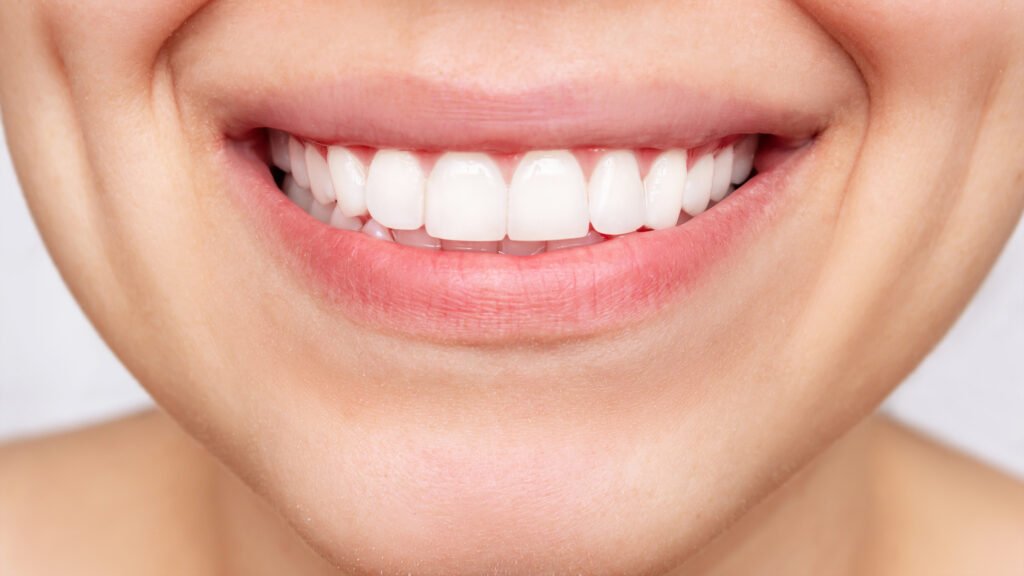
Hollywood smile isn't actually a single treatment; it's a concept that defines a "smile appearance" consisting of symmetrical, light-colored, and evenly aligned teeth. In clinical practice, this look is achieved by combining different methods such as veneers, zirconium crowns, and teeth whitening, according to the individual's facial structure and expectations. The most common misconception we encounter in consultations with patients in Kemerburgaz, Göktürk, and the surrounding areas is the belief that Hollywood smile is a single, standard procedure. However, the correct result is achieved through personalized planning.
Is Hollywood Smile a Treatment or a Concept?
The term "Hollywood smile" is a marketing concept popularized by the flawless, radiant smiles of movie actors as they appear on camera. In dental literature, it's referred to as "smile aesthetics" or "smile design." It can be thought of as a brand name: its content varies depending on the clinic, the patient, and the chosen method.
It's important to understand this distinction because very different procedures can be offered under the same name. In some cases, just lightening the color and minor shape corrections may suffice, while in others, veneers may be necessary. A patient simply saying "I want a Hollywood smile" doesn't alone determine which method the dentist will use; the examination, expectations, and the current condition of the teeth are all evaluated together.
Another aspect of the concept is that a smile is not just about the teeth. The line of the lips, the amount of gum tissue visible, and the contours of the teeth when smiling all determine the overall result. Therefore, smile aesthetics aims to design the entire smile, not just individual teeth. A good result is achieved when the teeth are in harmony with the facial expression.
Which methods are used?
In smile aesthetics, three main approaches stand out, and these are often planned together:
- Porcelain lamina (laminate veneer): Thin porcelain veneers are bonded to the front surface of the tooth. In the correct indications, very little tooth tissue is removed; it is preferred for color and shape corrections.
- Zirconium coating: It is a more durable type of veneer that covers the entire tooth. It is especially used in teeth with extensive fillings, fractures, root canal treatments, and in cases requiring more comprehensive correction. It requires more tooth preparation than laminate veneers.
- Teeth whitening (bleaching): It allows for color lightening of healthy, even straight, teeth that are only dark in color, without any cutting or preparation. It is often the least invasive option.
A combination approach plays a key role here. For example, applying veneers to the front teeth while whitening the back teeth to the same shade provides both a natural and integrated result. The goal is not to unnecessarily cover all the teeth, but to achieve the desired look with minimal intervention.
The determining factor in choosing a method is the strength of the tooth. While teeth without problems other than color and shape are primarily treated with whitening, minor shape and color corrections are addressed with veneers; structurally weakened teeth, those with large fillings, or those that have undergone root canal treatment are more often treated with zirconium crowns. Therefore, it is common to apply different methods to different teeth in the same mouth; the important thing is not to impose a single solution on everyone, but to choose the appropriate method for each tooth.
Digital Smile Design and Planning
Today, smile aesthetics are not based on guesswork, but on measurable planning. In the digital smile design approach, facial photographs, intraoral scans, and video recordings (when necessary) are used to model the final appearance of the teeth before any procedure begins.
This method offers a tangible advantage to the patient: they can see the possible outcome before starting treatment and make decisions with the doctor regarding size, color, and symmetry. Furthermore, a temporary trial application called a "mock-up" allows for the planned smile to be temporarily placed and tested on the teeth. In this way, both the patient and the doctor agree on the same goal before proceeding with irreversible procedures.
Another benefit of digital planning is that it grounds expectations in realism. Excessively white or disproportionately large teeth that don't match facial proportions, lip line, and gum line don't look natural. Measurement-based design helps prevent such exaggerated results.
The Debate Between Natural Appearance and Tooth Cutting
In smile aesthetics, the most important issue to discuss is how much tooth tissue will be removed. Healthy tooth tissue, once removed, does not grow back; therefore, in modern dentistry, the principle of a "minimally invasive" approach, that is, achieving results with the least possible amount of cutting, is emphasized.
In some procedures, healthy teeth are excessively cut to make zirconium crowns in order to speed up the aesthetic process. However, if the tooth's structure and position are suitable, laminate veneers or simply whitening can be preferred with much less tissue loss. Proper planning should be based not on "which method is easier," but on "which method is the most protective for this tooth.".
A natural look is achieved not only by the color not being too white, but also by subtle textures on the tooth surface, transparency at the tips, and dimensions that are harmonious with neighboring teeth. A good smile design is a result that doesn't look "artificial" from a distance, and that fits the person's face.
The patient's age should also be considered when making a decision about tooth preparation. In young individuals, premature crowning of healthy teeth can initiate a chain of further procedures, as crowns also have a limited lifespan and may need to be replaced. Therefore, especially in young patients, the most conservative options are evaluated first. Openly discussing the long-term consequences of an aesthetic decision with the patient is part of responsible dentistry.
Who is it suitable for and how long does it last?
Smile aesthetics can be considered for individuals with permanent darkening of tooth color, deformities, mild crowding, gaps between teeth, or dissatisfaction with old fillings and crowns. However, not every patient is directly suitable for aesthetic procedures. If there is active periodontal disease, untreated cavities, or serious bite (jaw alignment) problems, these must be addressed first. Aesthetics are built on a healthy foundation.
Individuals with teeth clenching and grinding (bruxism) habits should also plan additional measures; otherwise, the lifespan of veneers or laminates may be shortened. Therefore, the decision is made not only based on aesthetic expectations but also by considering the overall oral health.
The longevity of the results varies depending on the chosen method, oral hygiene, and dietary habits. Well-maintained porcelain veneers and zirconium crowns can function for many years; however, the effect of whitening may diminish over time due to factors such as coffee, tea, and smoking, and may require touch-ups. Regular dental check-ups, daily brushing, and flossing are crucial for the longevity of the results. As we emphasize to our patients in and around Kemerburgaz, Göktürk, Sarıyer, Arnavutköy, Bahçeköy, and Zekeriyaköy, the best aesthetic results are achieved when proper planning and regular care come together.
Frequently Asked Questions
Is it absolutely necessary to shape the teeth to achieve a Hollywood smile?
No. Depending on the condition of your teeth, whitening alone or laminates that involve minimal tissue removal may be sufficient; the amount of removal varies depending on the chosen method and the tooth structure.
What is the difference between laminate and zirconium?
Veneers are thin porcelain veneers applied only to the front surface of the tooth and require less cutting; zirconium, on the other hand, is a more durable coating that completely covers the tooth and is preferred for more extensive corrections.
Will the result look natural or artificial?
A design that is planned to suit facial proportions and lip line, with measured color and size choices, looks natural; excessive whiteness and disproportionate teeth, on the other hand, leave an artificial impression.
How can I maintain the effect after getting it done?
Regular brushing, flossing, six-month dental checkups, and avoiding staining factors will help maintain the results for many years.
For a smile plan tailored to your facial features Kemerburgaz and its surroundings We can evaluate you at our clinic. Smile Design You can get information about it or You can contact us to schedule an appointment..