
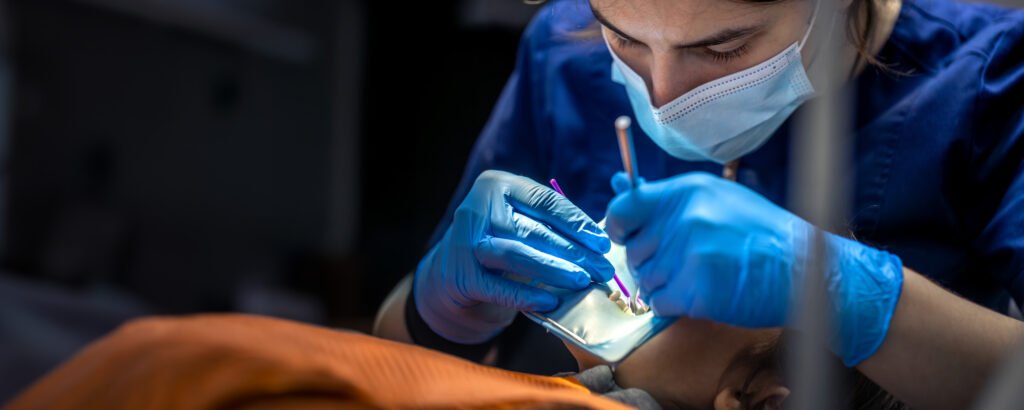
In children, cavities often begin silently in the deep grooves on the chewing surfaces of molars, without a visible hole forming. Fissure sealants are a painless, incision-free protective procedure that stops decay before it even starts by sealing these at-risk areas. At our clinic in Kemerburgaz, we regularly recommend this method, especially for school-aged children, because a simple procedure done at the right time can significantly reduce the need for fillings or root canal treatment later on.
What is fissure sealant?
Fissure sealant, also known as "sealant" in dentistry, is a fluid protective material that seals the fine grooves and pits (fissures) on the chewing surface of molars. It is applied in a thin layer to the tooth surface and hardened with a special light, thus fixing it in place. The aim is to smooth out these deep indentations where food particles and bacteria can accumulate, protecting areas that a toothbrush cannot reach.
A fissure sealant is not a filling. A filling is a repair where decayed tissue is cleaned and replaced with material; a fissure sealant, on the other hand, is a barrier that protects a healthy tooth before decay occurs. This distinction is important: a sealant is a preventative measure before damage happens, not a repair done afterwards.
Why are molars particularly at risk?
The molars and premolars at the back of our mouths do most of the chewing. Their surfaces are not smooth; they contain fissures—ridges and valleys—that are noticeable even to the naked eye. In some children, these grooves are so narrow and deep that even a toothbrush bristle cannot fit inside.
The result is this: even if a child brushes their teeth regularly, bacterial plaque that remains at the bottom of the fissures cannot be removed. In these areas, bacteria that feed on sugar produce acid, which dissolves the enamel surface and leads to the onset of decay. While the flat surfaces of the front teeth are relatively easily protected by brushing and saliva, the chewing surfaces of the molars remain the area where childhood caries most frequently occur. Fissure sealants aim to eliminate precisely this anatomical disadvantage.
At what age and to which teeth is it applied?
The timing of fissure sealant application is directly related to the eruption of the tooth. Once a tooth has fully erupted, its chewing surface begins to come into contact with saliva and food; ideal protection is achieved in the first few months following eruption, before caries begins.
- Baby molars: Some children also have deep fissures in their primary molars, and if these teeth are at high risk of decay, sealants can be applied to them as well. Since primary teeth hold space for permanent teeth, their early loss is undesirable.
- Permanent molars: The first permanent molars usually erupt around age 6, and the second molars around age 12. As soon as these teeth erupt, their chewing surfaces are at their most suitable time for protection.
- Premolars: If the fissure structure is prominent, these teeth are also evaluated after eruption.
The decision is made individually for each child. During the examination, the dentist needs to assess the depth of the fissures, the child's overall risk of cavities, and their oral hygiene habits. Healthy teeth with deep fissures that show no signs of cavities are the most suitable candidates for sealants.
How is the process carried out?
Fissure sealant application is one of the most comfortable dental procedures for children. The tooth is not cut, no anesthesia is used, and it is usually completed in a few minutes. The steps are as follows:
- Cleaning: The chewing surface of the tooth to be treated is cleaned by removing plaque and debris.
- Surface preparation: To ensure the sealant adheres well to the tooth, the enamel surface is slightly roughened, then washed and dried. This step is completely painless.
- Insulation: The area must be kept dry of saliva; keeping moisture away is critical for a secure adhesion of the covering.
- APPLICATION: The fluid sealant material is applied to the fissures and allowed to settle into the recesses.
- Hardening: The material is cured with a special light. This creates a durable, protective layer.
- Control: The child's bite is checked; the covering is slightly adjusted if necessary. The child can eat and drink immediately after the procedure.
Because it doesn't involve numbness or drilling, children generally approach this procedure without anxiety. This is also valuable in terms of establishing a positive first experience with the dentist.
Durability, control, and protection combined with fluoride.
Fissure sealants are not permanent; they can wear down, detach at the edges, or partially break over time under chewing force. Therefore, sealant application is not a one-time procedure to be forgotten. During regular check-ups, the dentist evaluates the integrity of the sealant; worn or missing areas are replaced as needed. Routine check-ups every six months provide a suitable rhythm for monitoring both the sealant and the overall health of the tooth.
The protection of fissure sealants is limited to the grooves on the chewing surface. The edges of the tooth near the gums, interdental spaces, and other surfaces should still be protected with regular brushing and flossing. Fluoride is an important complement here: while the sealant provides a physical barrier in the fissures, fluoride strengthens the enamel, increasing acid resistance on all surfaces of the tooth. When fluoride toothpaste, fluoride applied as recommended by a dentist, and fissure sealants are used together, a comprehensive and effective protection against childhood caries is achieved.
We recommend that families coming to our clinic from Kemerburgaz, Göktürk, Sarıyer, Arnavutköy, Bahçeköy, and Zekeriyaköy schedule an evaluation as soon as their children's molars erupt. Early and properly timed fissure sealants help keep teeth healthy without the need for more extensive treatments later on.
Frequently Asked Questions
Is fissure sealant treatment painful?
No. The procedure is painless because no tooth is cut and no anesthesia is used; for most children, it's a comfortable procedure completed in a few minutes.
How long does fissure sealant last?
The covers can wear down over time due to trampling force. Therefore, their integrity is assessed during regular inspections and they are replaced when necessary.
If I have fissure sealants, do I still need to brush my teeth?
Absolutely necessary. Sealants only protect the grooves on the chewing surface; brushing, flossing, and fluoride are essential for the other surfaces of the tooth.
Can fissure sealants be applied to baby teeth as well?
Yes. If primary molars have deep fissures and are at high risk of decay, sealants can also be applied to these teeth for protective purposes.
For your child's preventive dental care Göktürk and its surroundings We can evaluate you at our clinic. Pediatric dentistry You can get information about it or You can contact us to schedule an appointment..