
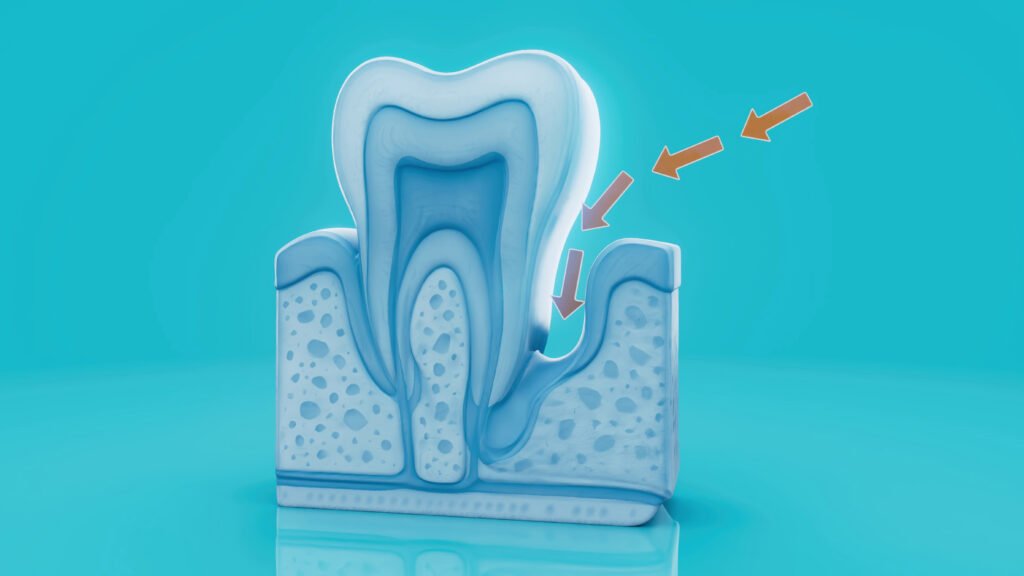
Bleeding gums are often overlooked, yet this symptom can indicate two different diseases: reversible gingivitis or periodontitis, which slowly erodes the jawbone. The difference between the two is not just a matter of terminology; in one case, your gums can fully recover, while in the other, it may no longer be possible to regain the lost supporting tissue. One of the most common problems we see in our patients in Kemerburgaz, Göktürk, and surrounding areas is the confusion between these two conditions and the resulting delay in treatment.
What is gingivitis? Is it a reversible stage?
Gingivitis is inflammation caused by bacterial plaque accumulating on the tooth surface and irritating the gums. Here, the inflammation is limited to the soft tissue, the gums. The underlying bone and the periodontal connective tissue that connects the tooth to the jaw are not yet damaged. This distinction is critical: because the tissues are intact, the gums fully return to their former healthy state when plaque is regularly removed.
The most obvious signs of gingivitis are:
- Bleeding while brushing or flossing.
- Redness and a shiny, swollen appearance of the gums.
- Mild sensitivity, sometimes a metallic taste in the mouth.
- Bad breath
Pain is usually absent at this stage; many patients ignore bleeding, attributing it to the harshness of the toothbrush. However, healthy gums do not bleed with brushing. Bleeding is the earliest and most reliable indicator of inflammation. Pregnancy, diabetes, smoking, and certain medications can trigger or worsen gingivitis.
What is periodontitis? An irreversible progression.
If gingivitis is left untreated, the inflammation spreads to the supporting tissues beneath the gums. This stage is called periodontitis. At this point, not only the gums but also the periodontal ligament holding the tooth in the jaw, and most importantly, the jawbone, are destroyed. This is where the situation becomes irreversible: the eroded bone and lost connective tissue do not regenerate spontaneously.
In periodontitis, the gums separate from the tooth surface, creating spaces called "periodontal pockets." These pockets become hard-to-reach havens for bacteria and cannot be cleaned with normal brushing. As the disease progresses, the symptoms worsen.
- Gum recession; teeth appear longer.
- Exposure of the tooth root and associated sensitivity to hot and cold.
- Inflammation from the pockets or persistent bad breath
- Gaps between teeth, changes in tooth position
- In advanced cases, teeth become loose and eventually tooth loss occurs.
The insidious nature of periodontitis is that it can remain painless for a long time. Many patients only become aware of the condition when their teeth begin to loosen; this is usually when bone loss has progressed considerably.
The difference between gingivitis and periodontitis at a glance.
The key difference between the two conditions lies in which tissue the inflammation reaches. Gingivitis only affects the gums and can heal completely. Periodontitis, on the other hand, involves bone and connective tissue; the damage here is permanent, and the goal is to stop the disease and preserve the existing tissue.
- Affected tissue: In gingivitis, only the gums are affected; in periodontitis, the gums, connective tissue, and jawbone are affected.
- Return: Gingivitis is reversible; bone loss in periodontitis is irreversible.
- Pocket formation: Gingivitis does not have these; periodontitis shows deep periodontal pockets.
- Risk of tooth loss: Gingivitis is extremely rare; periodontitis, if left untreated, is the leading cause of tooth loss.
An important fact is that every case of periodontitis begins as gingivitis, but not every case of gingivitis progresses to periodontitis. What determines progression is early diagnosis and regular care.
How do treatment approaches differ?
Treatment depends on the severity of the disease. In gingivitis, the goal is to remove plaque and tartar, allowing the gums to heal. This is usually achieved through professional tartar removal. After the procedure, the patient is taught proper brushing and flossing techniques; gum health improves within a few weeks.
In periodontitis, superficial cleaning is insufficient because bacteria and tartar have settled deep into pockets along the tooth root. The treatments applied here are gradual:
- Root surface smoothing (curettage / SRP): Tartar and inflamed tissue adhering to the root surface under the gums are cleaned with special instruments, and the root surface is smoothed. This is often sufficient to control inflammation in moderate cases.
- Surgical treatment: In advanced cases where deep pockets do not close, the gum tissue is slightly lifted to directly access the root surfaces. In appropriate cases, regenerative methods such as bone grafting are considered to support the lost bone.
- Maintenance therapy: Periodontitis treatment is not a one-time process that is forgotten. Regular periodontal check-ups and cleanings are necessary to prevent the disease from recurring.
In short: while gingivitis can often be resolved with a single cleaning session, periodontitis is a longer, multi-stage process requiring lifelong follow-up. This difference alone explains why early diagnosis is so valuable.
Why is early diagnosis so important?
The line between gingivitis and periodontitis is often an unnoticed threshold. Bleeding gums are a simple warning sign, and by the time this warning is heeded, the disease is still at a point where it is completely reversible. Once this threshold is crossed, it is impossible to restore the lost bone; the best course of action is to halt the disease and preserve the remaining teeth.
Therefore, routine dental checkups and professional cleanings every six months are both much simpler and much more protective for your tissues compared to advanced periodontal treatments. Our advice to patients in Kemerburgaz and the surrounding areas is not to delay seeking medical attention if you notice even the slightest bleeding or receding gums. Early assessment often makes the difference between losing and saving a tooth.
Frequently Asked Questions
Does gingivitis go away on its own?
Gingivitis can significantly improve if plaque is removed regularly and correctly; however, since the underlying tartar buildup cannot be removed by brushing, professional cleaning is often necessary.
Can gum tissue and bone lost in periodontitis grow back?
Bone loss and receding gums do not regenerate spontaneously. The goal of treatment is to halt the disease and preserve existing tissue; in appropriate cases, limited improvement can be achieved with surgical and regenerative methods.
I'm bleeding from my gums but I don't feel any pain, is that important?
Yes, it is important. Both gingivitis and early periodontitis are usually painless; bleeding is the earliest sign of inflammation and should not be ignored.
What should I do to prevent periodontitis?
Brushing twice a day, flossing, and having a professional check-up every six months are the most effective preventive measures; quitting smoking and keeping diabetes under control significantly reduce the risk.
To assess your gum health Göktürk and its surroundings We can evaluate you at our clinic. Gum Treatment You can get information about it or You can contact us to schedule an appointment..