
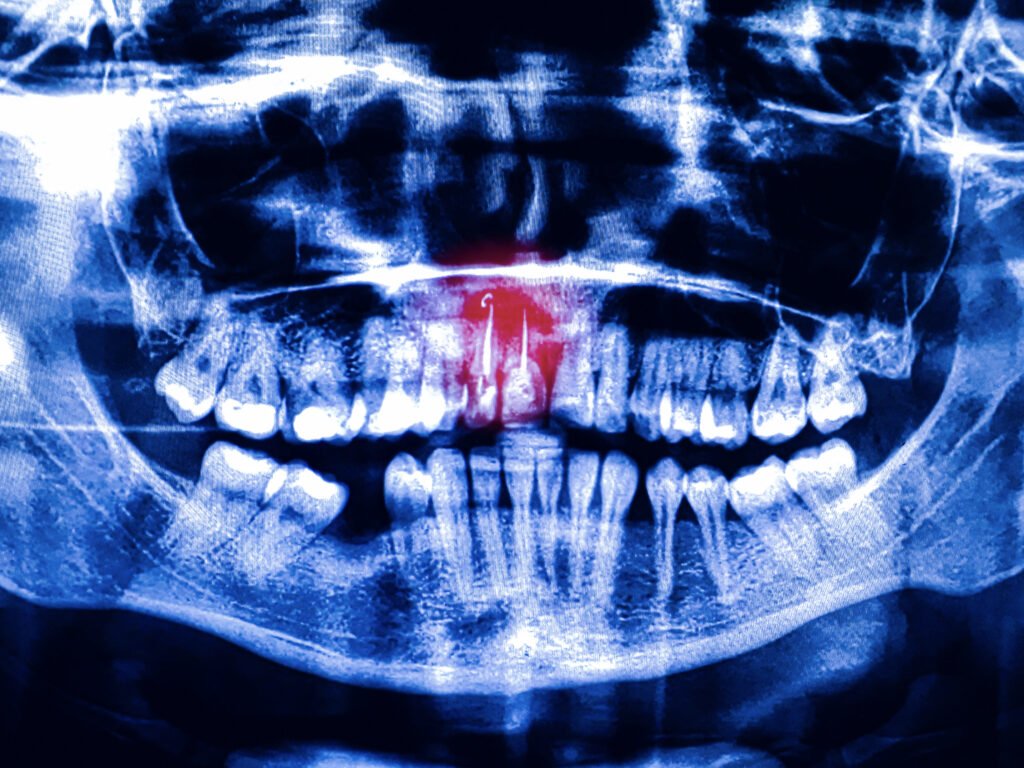
The most frequent question asked by patients who come to us with severe toothache is: "Can this tooth be saved, or does it need to be extracted?" This is not a simple matter of choice. The right decision depends on how much tooth structure has been lost, the health of the root structure, and the condition of the surrounding bone. We always explain the same principle to our patients coming from Kemerburgaz, Göktürk, and Sarıyer: Every natural tooth that can be saved in a healthy way is more valuable than any prosthesis or implant. However, when the effort to save it risks oral health, extraction becomes the more appropriate choice. Here, we explain from a doctor's perspective how the line between these two options is determined.
Why Should Preserving Natural Teeth Always Be the Priority?
A natural tooth is the product of millions of years of design, and no artificial solution can perfectly replicate its function. The tooth root distributes the chewing force evenly across the jawbone, constantly stimulating the bone and preventing resorption. When a tooth is extracted, this stimulation ceases; the bone in that area begins to thin over time. Furthermore, the periodontal connective tissue surrounding the root has a sensitive sensory system that detects biting pressure. This sensory mechanism is absent in both implants and bridges.
Therefore, the fundamental approach in modern dentistry is "to save the tooth that can be saved." Root canal treatment serves precisely this purpose: it cleans the inflamed or dead tissue inside while keeping the healthy, visible part of the tooth in place. In other words, the root cause of the problem is eliminated without extracting the tooth. The effort put into saving a tooth protects both the jaw structure and neighboring teeth in the long run.
In what situations can root canal treatment save a tooth?
Root canal treatment is performed when the nerve and blood vessel tissue that forms the pulp of the tooth is irreversibly damaged. The critical point is this: if the problem is in the living tissue of the tooth but the hard tissue and root are healthy, that tooth can most likely be saved. Root canal treatment is generally successful in the following cases:
- Inflammation that has reached the nerve due to deep decay: When decay progresses and reaches the pulp, the tooth begins to throb. If the root structure is healthy, the tooth can be saved with cleaning and filling.
- Irreversible pulpitis: Prolonged, spontaneous pain following exposure to hot or cold is a sign of this; the pain disappears after cleaning the root canals.
- Abscess formation at the root tip: Even if the inflammation has spread from the root tip to the bone, if bone loss is limited, root canal treatment can clean the source of the infection, and the bone will heal over time.
- Post-traumatic nerve death: Even if the front teeth that have been injured experience discoloration and loss of sensation, the tooth can be saved if the root integrity is preserved.
For teeth that have lost a significant amount of tooth structure after root canal treatment, crowns are often recommended. Crowns surround the fragile tooth, protecting it from chewing forces and allowing the tooth to remain in the mouth for many years. Considering these two procedures together, root canal treatment is a much more protective solution than extraction.
What are the situations in which a tooth needs to be extracted?
Not every tooth can be saved. In some cases, trying to forcibly keep a tooth in place is both unsuccessful and damaging to the surrounding tissues. As dentists, we never rush the decision to extract a tooth; however, in the following cases, extraction is the best option for oral health:
- Excessive substance loss: If the crown of the tooth is largely damaged and there is no healthy tissue left for a crown to hold, the tooth will break shortly after root canal treatment. In this case, extraction is a more predictable solution.
- Vertical root fracture: When a fracture progresses vertically along the root, bacteria constantly seep between the two fragments. This type of fracture is irreparable and becomes a source of chronic infection; the tooth must be extracted.
- Advanced bone loss (advanced periodontal disease): When the bone surrounding the tooth erodes significantly, the tooth begins to loosen. Even if the root is healthy, the tooth loses its function because there is no longer enough bone support to hold it in place.
- Repeated failed root canal treatments: Extraction becomes an option for teeth that have previously been treated but whose infection persists and does not respond to further treatment.
In these cases, extraction is not a failure, but a conscious decision to protect neighboring teeth and jawbone from spreading infection. The goal is not to risk the entire mouth in order to save a single tooth.
Why is it essential to fill the gap after the photoshoot?
When a tooth is extracted, the job isn't finished; the real challenge is managing the gap. Unfortunately, many patients leave the spaces between their back teeth empty for years, thinking "it's not visible anyway." However, every empty tooth socket is the beginning of a chain reaction that disrupts the balance in the mouth.
The tooth opposite the gap gradually lengthens, and the teeth on either side tilt towards the gap. This shifting disrupts the chewing pattern, causes strain on the temporomandibular joint, and creates areas that are difficult to clean, paving the way for new cavities and gum problems. Furthermore, since the root no longer stimulates the bone, bone loss begins in that area; as this loss progresses, future treatments become more difficult and costly.
Therefore, the post-extraction gap must be closed after an adequate healing period. There are two main options: Dental implant, A titanium root implanted in the jawbone independently completes a single tooth without touching neighboring teeth, while continuing to stimulate the bone. Bridge An implant is used to place a tooth between two teeth, supported by the teeth on either side of the gap. In many cases, implants are a more permanent solution as they protect neighboring teeth and prevent bone loss; however, the right choice depends on the patient's bone structure and overall oral health.
Why is CBCT crucial in making the right decision?
The answer to the question of whether to have a root canal or an extraction cannot always be clearly seen with the naked eye or with a standard two-dimensional X-ray. The true length of the root, the number and curvature of the canals, the presence of a hidden root fracture, or the extent to which inflammation at the root tip has spread into the bone can only be understood with three-dimensional imaging. This is where the crucial point lies. CBCT (cone-beam computed tomography) it takes effect.
CBCT displays the tooth and surrounding bone in three dimensions with millimeter precision. This allows the dentist to assess, in a single image, whether the tooth can truly be saved with root canal treatment, whether bone support necessitates extraction, and if extraction is necessary, whether there is sufficient bone volume for an implant. In short, CBCT bases both saving and extraction decisions on concrete data, not guesswork.
At our clinic in Kemerburgaz, we meticulously perform this assessment in every complex case. We want to emphasize that for our patients coming from Göktürk, Sarıyer, Arnavutköy, Bahçeköy, and Zekeriyaköy, we first explore ways to save the tooth, and only recommend extraction when it is truly unavoidable and in conjunction with a plan to close the gap. The decision you make when you come in with a painful tooth will shape the future of not just a single tooth, but your entire oral health; therefore, accurate diagnosis is key.
Frequently Asked Questions
Will a tooth that has undergone root canal treatment last a lifetime?
A properly made tooth, and protected with a veneer if necessary, can remain in the mouth for many years, often a lifetime, with regular care and checkups.
Could a tooth that doesn't hurt need to be extracted?
Yes. A tooth with advanced bone loss or a hidden root fracture may not cause pain, but it may need to be extracted because it puts surrounding tissues at risk.
How long should I wait after the photoshoot to fill in the gap?
The area typically takes several months to heal; implant or bridge planning will be done after this healing period, which will be determined by your doctor.
Is it necessary to perform a CBCT scan for every tooth?
No. In simple cases, a standard X-ray may suffice; CBCT is preferred especially in cases involving complex root canals, suspected root fractures, and implant planning.
To assess the salvageability of your tooth Kemerburgaz and its surroundings We can evaluate you at our clinic. Root Canal Treatment You can get information about it or You can contact us to schedule an appointment..