
Missing a few teeth in the mouth affects both chewing function and smile aesthetics; neighboring teeth in the gap may tilt over time, and teeth in the opposing jaw may elongate. There are several ways to replace missing teeth, and one of them is partial dentures. In this article, we examine what partial dentures are, in what situations they are preferred, their types, and their difference from fixed solutions from a clinical perspective.
What is a partial denture?
Partial dentures are removable dental prostheses used when some teeth are present in the mouth while others are missing. They are also called "partial dentures." Unlike full dentures, which are used when all teeth are lost, partial dentures are held in place by the support of the remaining healthy teeth in the mouth. Because they are removable appliances that the patient can put in and take out, they belong to the group of removable dentures.
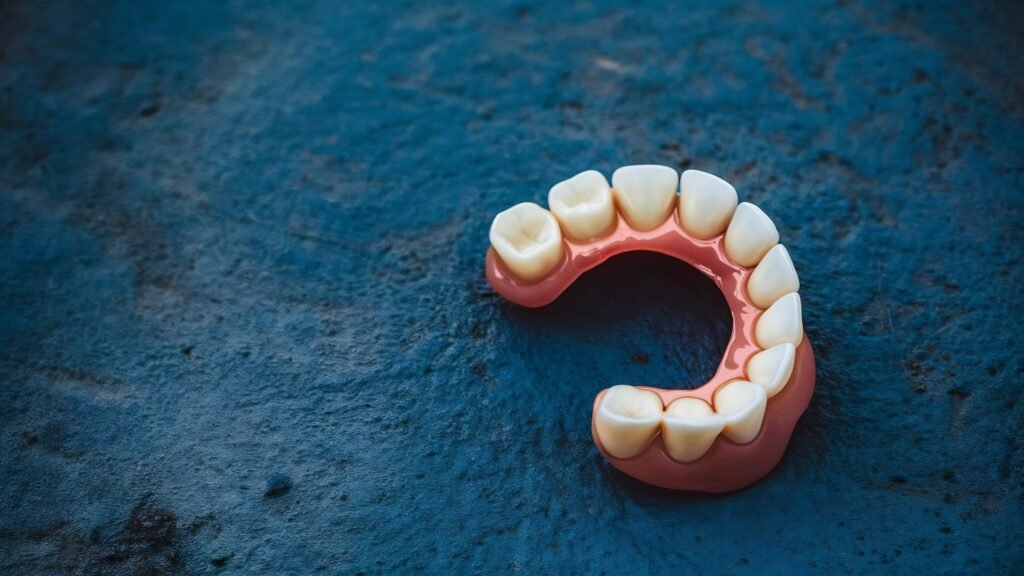
The body of the prosthesis typically consists of a pink acrylic base that mimics the gum, artificial teeth placed on this base, and retaining elements that connect the prosthesis to the natural teeth in the mouth. The goal is not only to close the gap; it also aims to distribute chewing force evenly, correct speech, and maintain support for facial features.
Who are partial dentures suitable for?
Partial dentures are a suitable solution for patients who lack sufficient support in their mouth for bridges or implants, or for whom these options are not preferred for various reasons. They are generally considered in the following situations:
- Missing multiple teeth in a row and the inability to securely close the gap with a bridge.
- The presence of scattered missing teeth in different areas of the jaw.
- Insufficient bone volume for implant placement or the patient's unwillingness to undergo surgery.
- Delaying a permanent solution due to a systemic health condition or waiting period.
- A phased treatment plan is preferred from an economic standpoint.
In our patients in and around Kemerburgaz, Göktürk, Sarıyer, Arnavutköy, Bahçeköy, and Zekeriyaköy, partial dentures are considered a reliable option, especially when there are significant missing teeth and the supporting teeth are sufficiently healthy. The suitability decision is made by evaluating the health of the remaining teeth, gum condition, bone structure, and jaw relationship.
Types of Partial Dentures
Partial dentures differ in how they attach to the teeth in the mouth and the material from which their bases are made. The attachment method directly affects the appearance and comfort of the prosthesis.
Prostheses with clasps (metal hooks): This is the most common type. The prosthesis is attached to the remaining natural teeth via metal clasps. These clasps wrap around the tooth, keeping the prosthesis in place. While it is a durable and relatively economical solution, the clasps placed on the teeth in the smile area may be slightly noticeable when speaking or smiling. The placement of the clasps is planned to minimize the impact on aesthetics.
Precision implants: Instead of metal hooks, it works with interlocking, hidden retention mechanisms. One part of the retainer is placed inside a crown made for the remaining tooth, while the other part is hidden inside the prosthesis. This eliminates visible metal hooks and provides a significantly higher aesthetic result compared to clasp-based prostheses. However, this system requires crowning of the supporting teeth and necessitates more advanced laboratory workmanship.
Metal (cast) based prostheses: The prosthesis's framework is cast from an alloy such as cobalt-chromium. Because the metal framework can be made thin, the prosthesis is lighter and more durable, and the surface area covered by the prosthesis can be reduced. This provides an advantage, especially in the upper jaw, in terms of taste perception and comfort.
Acrylic-based prostheses: Made entirely of acrylic resin, these prostheses are mostly preferred as a temporary solution or in cases where further tooth extraction is expected in the future. They require a thicker base than metal frames; they cover a wider area of the palate in the upper jaw. They are easy to repair and have teeth added to them.
Comparison of Fixed Bridge and Implant
Partial dentures are not the only option for replacing missing teeth. Understanding the differences between fixed bridges and implants is helpful in making the right decision.
Fixed bridge, A bridge is a restoration that is fixed onto the teeth on either side of the gap after they have been reduced in size. Because it is bonded to the mouth, it cannot be removed by the patient; it provides a chewing sensation similar to a natural tooth. However, a bridge can only be applied in cases of a limited number of consecutive missing teeth and if the adjacent teeth are healthy. In cases of numerous or scattered missing teeth, a bridge is often insufficient; this is where a partial denture comes into play.
Dental implant, A screw is placed in the jawbone to mimic the root of a missing tooth, and a fixed tooth is then made on top of it. Important advantages include not affecting neighboring teeth and stimulating bone resorption to slow it down. However, it requires surgery, demands sufficient bone volume, and has a longer treatment time.
The advantage of partial dentures over fixed options is that they can be applied even in cases where many teeth are missing, they do not require surgery, and they require less work on adjacent teeth. Their disadvantage is that they are removable, requiring an adjustment period and need to be removed from the mouth for regular cleaning. Which method is suitable is determined individually for each patient after an intraoral examination and radiographic evaluation.
Adaptation Process and Maintenance
Getting used to a newly fitted partial denture can take anywhere from a few days to a few weeks. In the first few days, you may experience a feeling of fullness in your mouth, slight changes in speech, and increased saliva production; these will decrease over time. Practicing reading aloud to help speed up speech development, and starting chewing with soft foods and evenly on both sides, will facilitate adjustment. Simple adjustments by your dentist are important for any minor initial soreness; do not attempt to grind down the denture yourself.
In terms of maintenance, partial dentures require regular cleaning to protect the health of both the denture itself and the remaining natural teeth.
- Remove your dentures after each meal and clean them under running water with a soft brush; use liquid soap or denture cleaner instead of abrasive toothpaste.
- Brush your natural teeth and gums separately; pay particular attention to the areas where the retainers will make contact.
- Remove the prosthesis at night to allow your gums to rest, and store it in water or cleaning solution to prevent it from drying out.
- Take care not to drop the prosthesis; the metal frame and acrylic base may crack from impact.
- Since oral structure changes over time, have the fit of the prosthesis and the condition of the supporting teeth monitored with regular check-ups.
A properly planned and regularly maintained partial denture can restore chewing and speech functions while preserving the support of a smile. A clinical examination and evaluation is the best way to determine which solution is right for your missing teeth.
Frequently Asked Questions
How long does it take to get used to a partial denture?
Although it varies from person to person, it generally takes between a few days and a few weeks; this process can be shortened with speech and chewing exercises.
Should partial dentures be removed at night?
Yes, to allow your gums to rest and maintain oral health, it's recommended to remove your denture at night and store it in a cleaning solution or water.
What is the difference between clasp-type and precision retention dentures?
Clasp-type prostheses are held in place by metal hooks and are visible from the outside; in precision retention prostheses, the retainers are hidden, and the aesthetic result is superior.
Which is better: partial dentures or implants?
Both methods have their own advantages; the decision is made on a case-by-case basis during an examination, taking into account bone condition, number of missing teeth, and overall health.
To determine the most suitable prosthetic option for your missing teeth. Göktürk and its surroundings We can evaluate you at our clinic. Dental implant treatment You can get information about it or You can contact us to schedule an appointment..