
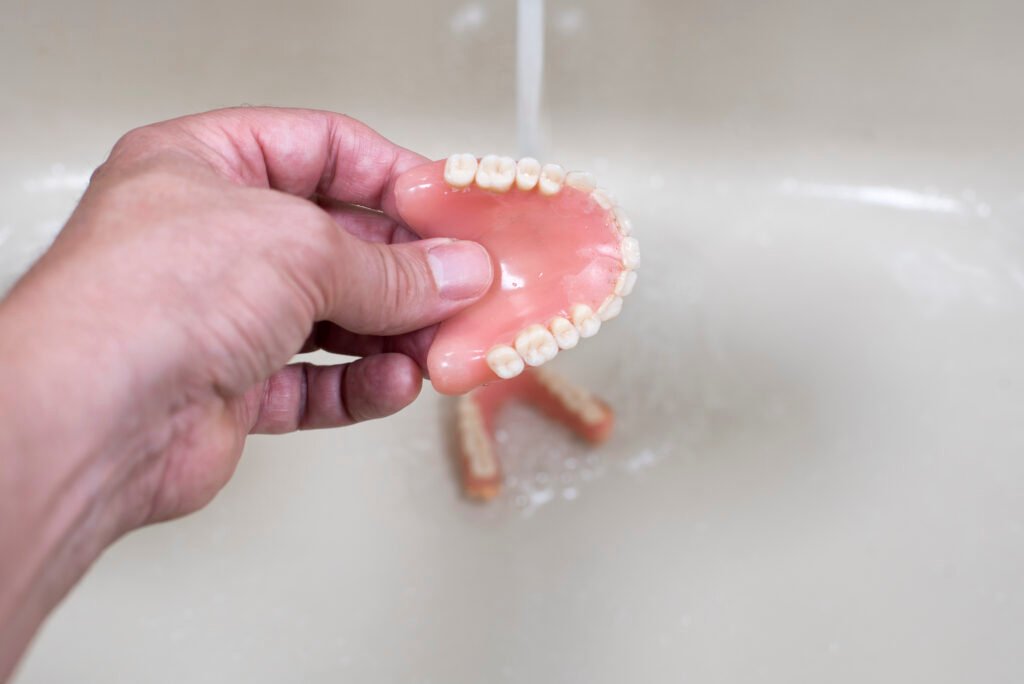
When used correctly, dentures provide comfortable chewing and a beautiful smile for years; however, this depends largely on daily care. Because dentures are in constant contact with the gums, palate, and soft tissues in the mouth, accumulated food particles can be a source of both bad breath and infection. In our patients in Kemerburgaz, Göktürk, and surrounding areas, one of the most common problems we encounter is incorrect cleaning habits. In this article, we will discuss practical and clinically correct methods for denture care step by step.
How should a prosthesis be cleaned daily?
Dentures, just like natural teeth, are surfaces that need to be cleaned daily. Food particles, plaque, and bacteria easily adhere to the surface of dentures. Therefore, it is recommended that you clean your dentures at least twice a day, preferably after each main meal.
- Use a denture brush: Special denture brushes, designed to be softer than regular toothbrushes and capable of reaching the crevices of the prosthesis, should be preferred. Hard brushes create scratches on the prosthesis surface, and these scratches increase bacterial accumulation.
- Choose an appropriate cleanser instead of toothpaste: Standard toothpastes contain abrasive particles and can wear down the acrylic of dentures. Instead, liquid hand soap, mild soap without dish detergent, or cleaning gels made for dentures can be used.
- Use cleansing tablets: Water-soluble denture cleaning tablets help dissolve stains and microorganisms in areas that mechanical brushing cannot reach. However, these tablets are not a replacement for brushing; both should be used together.
Holding the prosthesis over the sink during cleaning can be risky; it's safer to fill the sink with water or place a towel underneath to prevent drops and breakage.
Why should you avoid hot water?
One of the most common mistakes in cleaning dentures is washing them with boiling or very hot water. Dentures are usually made of acrylic resin, and this material can change shape at high temperatures. A denture left in hot water can unknowingly lose its fit to the base and may never fit properly again.
Therefore, always clean your prosthesis with lukewarm or room temperature water. Similarly, it is not advisable to boil it or leave it in strong chemicals like bleach for extended periods to disinfect it; these substances can oxidize the metal parts and cause discoloration of the acrylic.
Removing and Properly Storing a Nighttime Prosthesis
It is important to remove dentures from the mouth overnight to allow the gum tissue to rest and heal. Leaving dentures in the mouth constantly puts pressure on the gums, restricts saliva circulation, and increases the risk of fungal infections. Removing the denture at night relieves pressure on the tissue, contributing to the preservation of oral health.
The removed prosthesis should not be left to dry. Acrylic material can crack and lose its shape if it dries. Therefore, the prosthesis should be left overnight in clean water or in the storage solution recommended by your dentist. Remember to wash the storage container and change the water daily.
Gum, Palate and Oral Care
Denture care isn't limited to the denture itself; the underlying tissues also need care. After removing the denture, the gums, palate, tongue, and inner cheek surfaces should be gently cleaned with a soft brush or damp gauze. This process removes accumulated plaque and also increases blood circulation through a massaging effect on the tissues.
For patients using partial dentures, cleaning the remaining natural teeth is also important. The teeth that the denture clasps make contact with are more prone to decay and gum problems; these areas need to be meticulously cleaned with a toothbrush and dental floss.
Denture Stomatitis and Fungal Risk
Inadequate cleaning and prolonged wearing of dentures can lead to fungal (Candida) growth under the dentures, resulting in a condition called "denture stomatitis." This can cause redness, sensitivity, burning sensation in the gums and palate, and sometimes cracks at the corners of the mouth.
The most effective way to prevent denture stomatitis is regular and proper cleaning. Removing the denture at night, keeping the cleaning solution clean, and regularly cleaning the tissues significantly reduces the risk of fungal growth. Since dry mouth, diabetes, or conditions that weaken the immune system increase this risk, care should be even more meticulous in these patients. If redness and discomfort persist, a dentist should be consulted immediately.
Check regularly if the base seating becomes unstable.
Over time, the bone and gum tissue in the mouth naturally change; consequently, the fit of the prosthesis may loosen. A prosthesis that moves while eating, comes out of place while speaking, or constantly causes sores in the gums means it is no longer fitting properly. In such cases, readjusting (refilling) the base of the prosthesis or replacing it if necessary becomes an option.
Attempting to adjust a loosened prosthesis yourself with adhesives or filing it down at home can damage the tissues. Fit problems should always be evaluated by a dentist. Even without any complaints, regular check-ups at least once a year are recommended to check the condition of the prosthesis and the health of the underlying tissues. During these check-ups, the prosthesis is cleaned and polished, and the oral tissues are examined for potential problems.
We recommend that our patients living in Kemerburgaz, Göktürk, Sarıyer, Arnavutköy, Bahçeköy, and Zekeriyaköy make regular care a habit for many years of comfortable use of their dentures. A properly cleaned and regularly checked denture will both protect your oral health and significantly improve your daily quality of life.
Frequently Asked Questions
Can I brush my dentures with regular toothpaste?
Standard toothpastes contain abrasive particles that can scratch the surface of dentures; instead, mild soaps or denture cleaners should be used.
Is it really necessary to take my prosthesis out at night?
Yes, to allow the gum tissue to rest and reduce the risk of fungal infections, it is recommended to remove the prosthesis overnight and soak it in clean water or a suitable preservative solution.
Is it safe to clean my prosthesis with hot water?
Hot water can distort the shape of the acrylic structure, permanently causing the prosthesis to lose its fit to the tissue; therefore, lukewarm or room temperature water should be used.
What should I do if my prosthesis becomes loose?
You should consult your dentist before attempting to adjust a loosened prosthesis at home; they can realign (refill) the base or replace the prosthesis if necessary.
For prosthesis check and oral health assessment. Kemerburgaz and its surroundings We can evaluate you at our clinic. Dental implant treatment You can get information about it or You can contact us to schedule an appointment..