
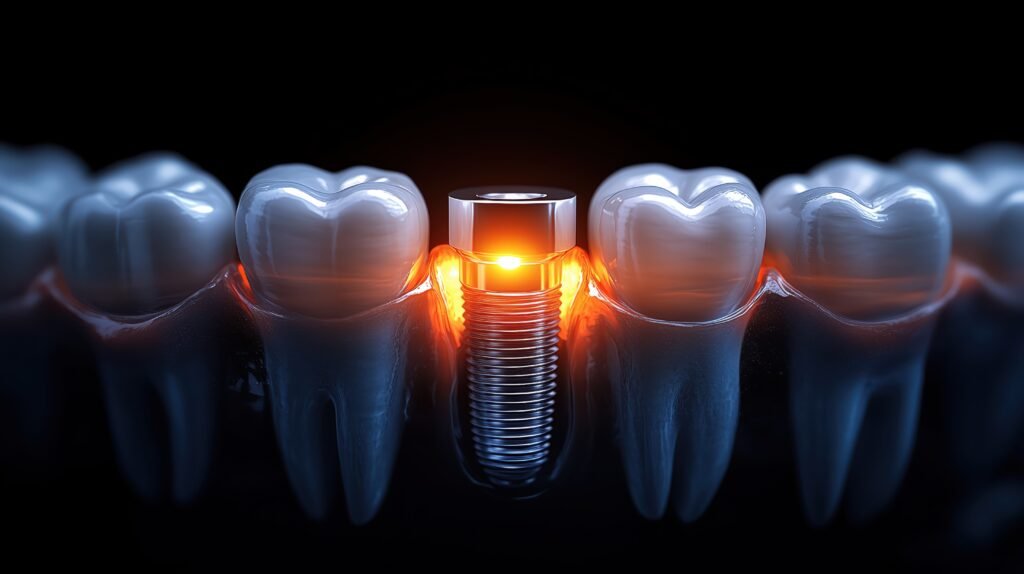
The most frequently asked question when deciding on dental implants is: “How long will this implant last?” This is a reasonable question, as implants are both a surgical procedure and a significant investment. The honest answer cannot be summarized in a single number: when properly placed and regularly cared for, an implant can last for decades, and in some patients, a lifetime. However, there is no such thing as a “guaranteed lifespan”; the life of an implant is a combined result of bone biology and your daily habits. We prefer to clearly explain this distinction from the outset to our patients coming from the Kemerburgaz, Göktürk, and Sarıyer areas.
The lifespan of the implant and the superstructure are not the same thing.
Implant treatment actually consists of two separate parts, and these two parts have different lifespans. Separating these is critical to making expectations realistic.
- Implant screw: The titanium or titanium-zirconium body is implanted in the jawbone. After fusion (osseointegration), it can remain in place for many years under healthy conditions. This is the truly "permanent" part.
- Superstructure (crown, bridge, or prosthesis): The superstructure is the visible tooth in the mouth that performs the chewing function. Because this part is constantly exposed to force, wear, and discoloration, it is normal for it to be replaced sooner than the implant itself. On average, it is normal for the superstructure to require revision or replacement over the years; this is not a failure, but a natural maintenance step.
So, the phrase "my implant is broken" often refers to the crown on top of the implant, not the implant screw. In this case, usually only the superstructure is replaced without touching the implant itself. Knowing this distinction will protect you from unnecessary anxiety and incorrect intervention.
The main factors that determine implant lifespan
The longevity of an implant depends not on a single factor, but on several interdependent factors. Many of these are under your control after the procedure.
- Peri-implantitis: This is the biggest threat to implant lifespan. It's when bacterial plaque in the gums inflames the tissue and bone surrounding the implant. You can think of it as the implant version of gum disease in natural teeth. If not detected early, the bone supporting the implant can regress, eventually leading to implant loss. The good news is that it's largely preventable.
- Oral hygiene: Implants themselves won't decay, but the surrounding gum tissue can become diseased. Daily brushing, using interdental brushes, and flossing to keep the area around the implant clean are the most repeatable habits that determine its lifespan.
- Cigarette: Smoking reduces blood circulation and healing capacity in the tissue, making osseointegration more difficult and significantly increasing the risk of peri-implantitis. It is known that implant loss rates are higher in patients who smoke.
- Teeth clenching and grinding (bruxism): Teeth grinding at night places constant excessive stress on the implant and superstructure. Over time, this force can lead to screw loosening, crown cracking, or excessive bone stress. In these patients, the use of a night guard directly extends their lifespan.
- Prosthetic fit and occlusion: The fit of the superstructure with the adjacent teeth and the balanced distribution of chewing force are important. A crown that is too high or makes incorrect contact will cause problems over time by applying force to the implant in the wrong direction. Therefore, post-operative bite adjustment is a crucial step that should not be neglected.
- Systemic health: Uncontrolled diabetes, certain medications, and conditions affecting bone density can impact recovery and long-term success. Therefore, we thoroughly assess your overall health history before treatment.
Proper care prolongs the life of implants.
Implant care is not complicated; the main thing is to do it regularly and correctly. The basic framework we provide to patients at our clinic in Kemerburgaz is as follows:
- Gentle brushing twice a day: Gently clean the gum margin around the implant. Brushing vigorously is not necessary as it can cause gum recession.
- Interface cleanup: Interdental brushes and implant-friendly dental floss remove plaque from areas that the toothbrush cannot reach. This is the most practical way to prevent peri-implantitis.
- Regular check-ups: During check-ups, usually performed every six months, we evaluate the tissue around the implant, the occlusion, and, if necessary, the bone level using radiography. When problems are detected early, they can often be resolved with a simple intervention.
- Professional cleaning: Implants are cleaned with different instruments than natural teeth. Cleaning with the wrong instrument can scratch the implant surface, so this procedure should be performed by an experienced team. Regular professional cleaning also removes stubborn tartar buildup that home cleaning cannot reach.
- Night record: If you have a history of teeth grinding, a night guard is one of the most effective measures to protect both the superstructure and the underlying bone.
None of these steps are miracles on their own; when applied together, they form a system that significantly extends the lifespan of the implant.
Early warning signs of a problem
Most implant-related problems give minor warning signs long before implant loss. Recognizing these signs can prevent a condition that could be resolved with a simple check-up from becoming serious. We recommend that you do not delay a check-up if you notice any of the following.
- Bleeding or redness of the gums: Bleeding or persistent redness when brushing the tissue around the implant is often the first sign of peri-implantitis and is reversible in the early stages.
- Gum recession: The metal portion of the implant becoming visible may indicate recession of the surrounding tissue or bone.
- A slight flickering or "click" sound in the crown: Often this means that the superstructure screw, not the implant itself, has loosened; with early intervention, it can simply be tightened.
- Pressure or discomfort while chewing: It can indicate an imbalance at closure, and if left uncorrected, the implant will be subjected to incorrect force.
- Bad taste or odor in the mouth: This could suggest a hidden buildup of inflammation around the implant.
None of these symptoms are cause for panic; on the contrary, they are opportunities to save the life of the implant if treated early. The absence of pain does not mean there is no problem, as peri-implantitis often progresses silently. This is where the value of regular check-ups comes in.
How can realistic expectations be established?
The healthiest approach to implant treatment is not to expect "a certain number of years," but rather to understand that "with good care, it will last a very long time." Clinical experience and long-term studies support high success rates and decades of use in implants that are regularly checked and well-maintained. However, this outcome is directly linked to the patient's habits and follow-up. The same implant may develop problems within a few years in a patient who smokes and doesn't come for check-ups, while it may function silently for decades in someone who pays attention to hygiene.
Therefore, we recommend that you view implants not as a "put in and forget" procedure, but as a long-lasting partnership. When properly planned surgery, a compatible superstructure, and consistent care you maintain come together, implants are one of the most durable solutions for improving your quality of life. The most consistent result we see in our patients from Göktürk, Zekeriyaköy, Bahçeköy, Arnavutköy, and Sarıyer is this: what determines the lifespan is not the brand of the implant, but how it is cared for.
Frequently Asked Questions
Do dental implants really last a lifetime?
With good care and regular check-ups, an implant screw can last for decades, even a lifetime in many patients; however, a precise duration cannot be guaranteed because its lifespan depends on hygiene and habits.
Why might the crown on the implant need to be replaced sooner?
The crown is constantly exposed to chewing forces, wear, and discoloration; therefore, replacing the superstructure over the years while the implant remains in the bone is a normal and regular maintenance step.
How does smoking affect the lifespan of dental implants?
Smoking impairs blood circulation and healing in the tissue, increases the risk of peri-implantitis, and raises the likelihood of implant loss; therefore, reducing it before and after the procedure is strongly recommended.
Can implants decay?
The implant itself does not decay because it is not tissue; however, the surrounding gum and bone can become inflamed, so regular cleaning and check-ups are key to implant health.
To ensure the longevity of your implant, a check-up and maintenance plan is needed. Kemerburgaz and its surroundings We can evaluate you at our clinic. Dental implant treatment You can get information about it or You can contact us to schedule an appointment..