
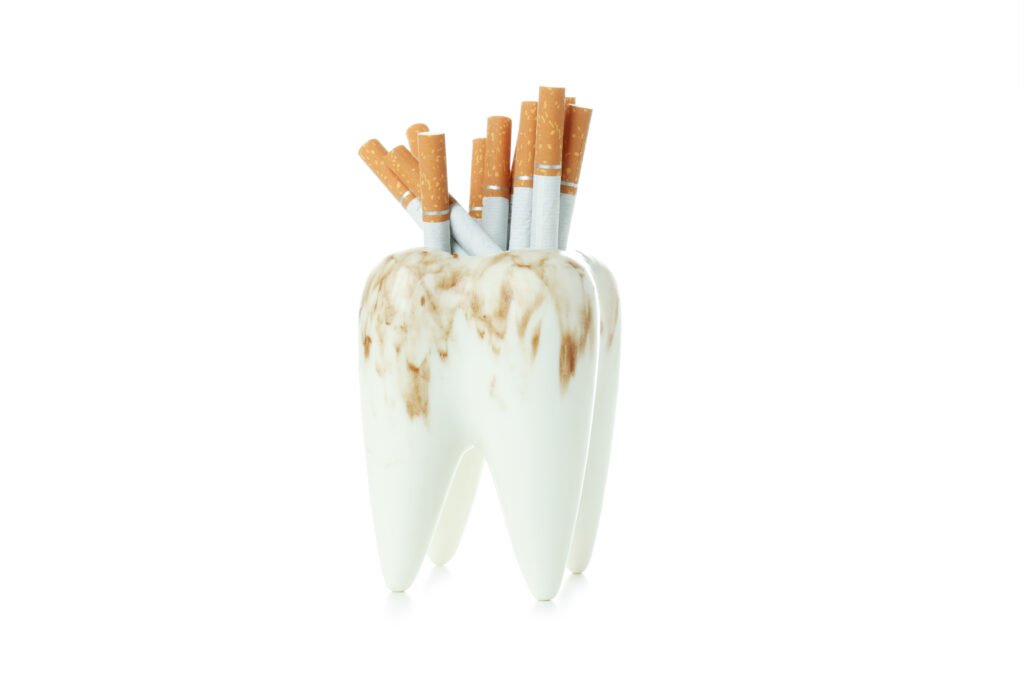
A frequently asked question by our patients planning dental implants is: "I smoke, can I still get implants?" The short answer is usually yes, but it's important to know that smoking directly affects every stage of implant treatment. The relationship between smoking and dental implants isn't just a matter of habit; it's linked by a biological chain encompassing everything from bone healing to gum health. At our Kemerburgaz clinic, we clearly explain this to our smoking patients before treatment, because the success rate increases significantly with a properly prepared patient.
How does smoking impair blood circulation and healing?
The success of implant treatment depends on the jawbone's ability to surround and accept the implant screw, that is, the healing process. This healing is possible only if the tissues receive sufficient blood, oxygen, and nutrients. Nicotine in cigarettes is a powerful substance that constricts blood vessels. After smoking a cigarette, blood flow in the small vessels in the mouth decreases measurably, and this effect lasts for minutes.
Reduced blood flow decreases the amount of oxygen reaching the surgical area. However, wound healing, including new blood vessel formation, collagen production, and cell regeneration, requires high oxygen levels. Carbon monoxide in cigarette smoke further reduces the oxygen-carrying capacity of the blood. As a result, the implant area of a patient who smokes is in a less nourished and slower-healing environment compared to a patient who does not smoke.
In addition, smoking impairs the functioning of immune cells and the protective effect of saliva. The defense against oral infections weakens. This creates an undesirable situation during the critical first weeks after implant surgery.
Risk of Osseointegration Failure and Peri-implantitis
Osseointegration is the direct fusion of the implant surface with the jawbone and is fundamental to the permanent retention of the implant. In an environment with reduced blood flow and oxygen, bone cells cannot adhere tightly enough to the implant surface. Studies show that implant failure is significantly more frequent in smokers compared to non-smokers. This difference is even more pronounced in the upper jaw, where the bone structure is looser.
The second, long-term risk is peri-implantitis. Peri-implantitis is an inflammatory disease that develops in the gum and bone surrounding the implant; if left untreated, it can lead to bone resorption and implant loss over the years. Smoking both facilitates the onset of this inflammation and accelerates its progression. Even if an implant is successfully placed in a patient who smokes, long-term follow-up and care are of even greater importance.
- Early risk: failure of the implant to fuse with the bone and loosening in the first few months.
- Late-term risk: gradual resorption of surrounding bone due to peri-implantitis.
- Additional risks: delayed wound healing after surgery and susceptibility to infection.
How long should smoking be stopped before and after the procedure?
The most frequent question is: “How many days before surgery do I need to quit?” Quitting smoking completely is, of course, the ideal option, but we know that's difficult. That's why we suggest a practical, goal-oriented plan. Quitting smoking at least one to two weeks before surgery ensures that the tissues enter the operating room in a better-nourished state.
The truly critical period is the post-operative period. The first week after implant placement is the most sensitive time in terms of clot formation and early healing. Therefore, abstaining from smoking for at least two, and preferably eight, weeks following surgery provides the most valuable contribution to a healthy onset of osseointegration. The longer the healing window remains smoke-free, the stronger the implant's attachment to the bone will be.
We determine these timelines together with the patient, taking into account their bone condition, smoking habits, and overall health. The goal is not to blame, but to create a concrete roadmap that will give the patient the highest chance of success.
Can dental implants be placed in patients who smoke?
Yes, but with caution. Smoking alone is not an absolute barrier to implants; it is a risk factor. In a patient who smokes more than a pack a day, has poor oral hygiene, and insufficient bone volume, the risk is layered, and we make the treatment decision more cautiously. In contrast, in a patient who smokes little, has regular oral care, and suitable bone structure, implants can often be successfully placed.
At this point, we conduct the assessment individually. We examine the bone condition with a detailed examination, panoramic and, if necessary, three-dimensional CT imaging, and we make our decision by also considering smoking habits. In some patients, it may be necessary to phase the treatment plan to support healing, allow longer waiting periods, or take additional measures. We conduct this assessment individually for each of our patients coming from Kemerburgaz, Göktürk, Sarıyer, Arnavutköy, Bahçeköy, and Zekeriyaköy areas.
Practical Tips for Patients Who Smoke
To improve implant success, we offer concrete and actionable steps to our smoking patients. These steps make a difference at every stage of treatment.
- If possible, stop completely before surgery; if not, significantly reduce its frequency in the days leading up to the procedure.
- Aim to completely abstain from smoking for the first two weeks after the procedure; this is the most crucial period for recovery.
- Maintain strict oral hygiene: brush your teeth, clean between the teeth, and use recommended mouthwashes regularly.
- Talk to your doctor about support methods that can make quitting nicotine easier; remember that you are not alone in this process.
- Don't miss your follow-up appointments; regular check-ups in smokers are the most effective way to detect peri-implantitis early.
- Drink plenty of water, eat a balanced diet, and limit other factors that can hinder recovery, such as alcohol.
Smoking does affect dental implants, but much of this effect can be managed with proper preparation and regular care. If you are considering implants and you smoke, the best step is to discuss your situation with a doctor before starting treatment. This way, we can plan together, based on real data, both the risks and ways to mitigate them.
Frequently Asked Questions
Can I get dental implants if I smoke?
In most cases yes, but smoking is a risk factor. An implant is usually feasible after an individual assessment based on your bone condition, oral hygiene, and smoking amount.
How long should I quit smoking before and after the implant procedure?
Ideally, quitting smoking at least one to two weeks before surgery and then for at least two, preferably eight, weeks after the procedure significantly improves recovery success.
Can smoking cause implant loss?
Smoking hinders the osseointegration of the implant and increases the risk of peri-implantitis, raising the likelihood of implant loss in the long term; therefore, regular follow-up is important.
Why does smoking slow down implant healing?
Nicotine constricts blood vessels and reduces blood flow, while carbon monoxide decreases oxygen transport. This leads to reduced blood supply to the surgical site and delayed healing.
To confidently plan your implant process. Göktürk and its surroundings We can evaluate you at our clinic. Dental implant treatment You can get information about it or You can contact us to schedule an appointment..