
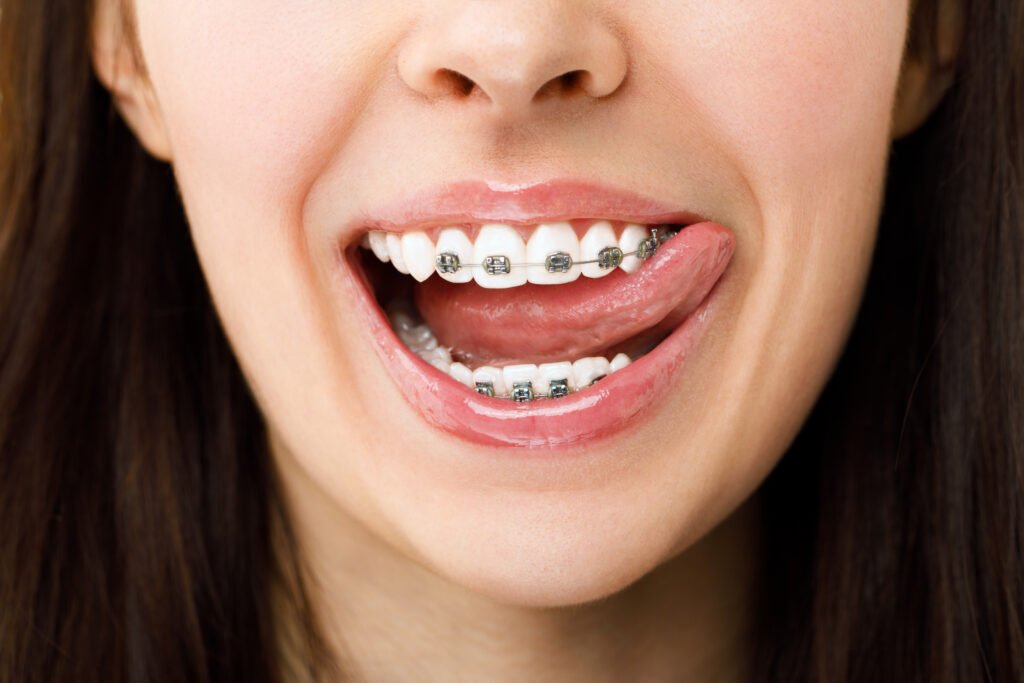
Orthodontic treatment with braces is an orthodontic method that gradually moves crooked, spaced, or misaligned teeth into their correct position. Many patients think braces are only for aesthetic correction; however, the goal is often to improve chewing function, gum health, and temporomandibular joint (TMJ) balance simultaneously. In this article, we explain how orthodontic treatment with braces works, the types of braces, how long the process takes, and what to expect after treatment from a clinical perspective.
How does orthodontic treatment work?
Brackets are small retaining pieces that are bonded to the teeth. A thin wire (arch wire) passes through these brackets, applying a constant and very gentle force to the teeth. This force initiates a controlled remodeling of the bone surrounding the tooth root: bone resorbs in the direction the tooth moves, while new bone forms behind it. Thus, the tooth gradually moves into its new position within the bone.
This biological process is slow and cannot be forced. Applying excessive force to the tooth will not accelerate the movement; on the contrary, it can damage root and bone health. Therefore, treatment progresses with small, regular adjustments spread over months. At each check-up appointment, the wires are changed or tightened, elastics are added as needed, and the teeth are guided towards the next goal.
Types of metal and ceramic brackets
Braces are basically divided into two main groups, and the choice depends on the degree of crowding, aesthetic expectations, and oral hygiene habits.
- Metal brackets: Made from stainless steel, it is the most durable and common option. It provides reliable results in complex tooth movements and is generally the most cost-effective choice. It is also the most visible type.
- Ceramic brackets: These brackets are closer to the color of your teeth and are less noticeable. They stand out aesthetically; however, they can be more fragile than metal brackets and require a little more attention to oral hygiene to prevent discoloration.
- Lingual braces: They are placed on the inner (tongue side) surface of the teeth, not the outer surface, and are almost invisible from the outside. The application and adaptation process is more specialized and may not be suitable for every case.
It's important to note that clear aligners (e.g., invisible aligner systems) are a different method than fixed braces; this article focuses on fixed brace treatment. We will decide together which type is right for you after examination and X-ray evaluation.
How long does the treatment last, and what determines the duration?
Orthodontic treatment with braces typically lasts between 18 and 30 months for most adult and young patients. This wide range is due to the fact that the duration depends on many variables, not just one factor.
- Degree of complexity: Mild irregularities resolve more quickly, while severe malocclusions or bite disorders take longer to resolve.
- Closure (jaw relationship) problems: If it's necessary to correct not only the teeth but also the relationship between the jaws, the treatment may take longer.
- Age and bone structure: Bone remodeling tends to be faster in younger patients.
- Patient compliance: Attending appointments regularly, wearing the prescribed elastics, and maintaining oral hygiene directly affect the treatment duration. Missed check-ups significantly prolong the treatment.
The time given for your appointment is an estimate; it may be updated along the way depending on how your teeth respond to the force.
Follow-up appointments, pain management, and the adjustment process.
During treatment, check-ups are usually scheduled every 4-8 weeks. At these appointments, the braces are changed and adjusted, and the progress of the teeth is assessed. This regular follow-up is the most important assurance that the treatment is progressing as planned.
Sensitivity or pressure is normal during the first few days after braces are fitted and for a few days after each wire change; this indicates that your teeth are beginning to move. Eating soft foods and using pain medication as recommended by your dentist can provide relief during this period. Using orthodontic wax during the first few weeks when the braces rub against your cheeks and the inside of your lips will reduce irritation. Avoiding hard, sticky, and sugary foods will both prevent the braces from coming loose and protect your dental health.
Oral hygiene and retention period
Oral hygiene is more important than ever during treatment because braces make it difficult to reach with a toothbrush. Plaque buildup around braces can lead to white spots (enamel loss) and gum inflammation. Regularly cleaning the area around the braces with a soft brush, interdental brushes, and an oral irrigator when needed is key to achieving a healthy smile at the end of treatment.
Treatment isn't considered complete when the brackets are removed. Teeth that have moved to their new position tend to return to their original position (relapse), and to prevent this, a retention appliance, or retainer, is used. Retainers can be fixed (a thin wire bonded to the back of the tooth) or removable (a clear aligner worn at night). The retention period is often as important as the active treatment; using a retainer for the duration and frequency recommended by your dentist ensures the results are permanent.
Orthodontic treatment requires patience and cooperation, but when properly planned, it yields lasting results in terms of both aesthetics and function. In Kemerburgaz, Göktürk, Sarıyer, Arnavutköy, Bahçeköy, and Zekeriyaköy areas, we can schedule an orthodontic appointment to review the current condition of your teeth together.
Frequently Asked Questions
Is orthodontic treatment painful?
Mild sensitivity is normal for a few days after braces are fitted and following each wire change; this is easily managed with a soft diet and prescribed pain medication as needed.
At what age can orthodontic treatment with braces be started?
Depending on tooth and jaw development, treatment can be applied to both adolescents and adults; suitability is determined by examination and X-ray evaluation.
Should I choose metal or ceramic brackets?
Metal brackets are more durable and economical, while ceramic brackets are less visible; the choice is made based on the degree of misalignment, your aesthetic expectations, and your hygiene habits.
Is it necessary to install retainers after the strings are removed?
Yes; the retention period is an integral part of the treatment to prevent the teeth from returning to their original position and must be used regularly for the recommended duration.
For orthodontic evaluation Göktürk and its surroundings We can evaluate you at our clinic. Smile Design You can get information about it or You can contact us to schedule an appointment..