
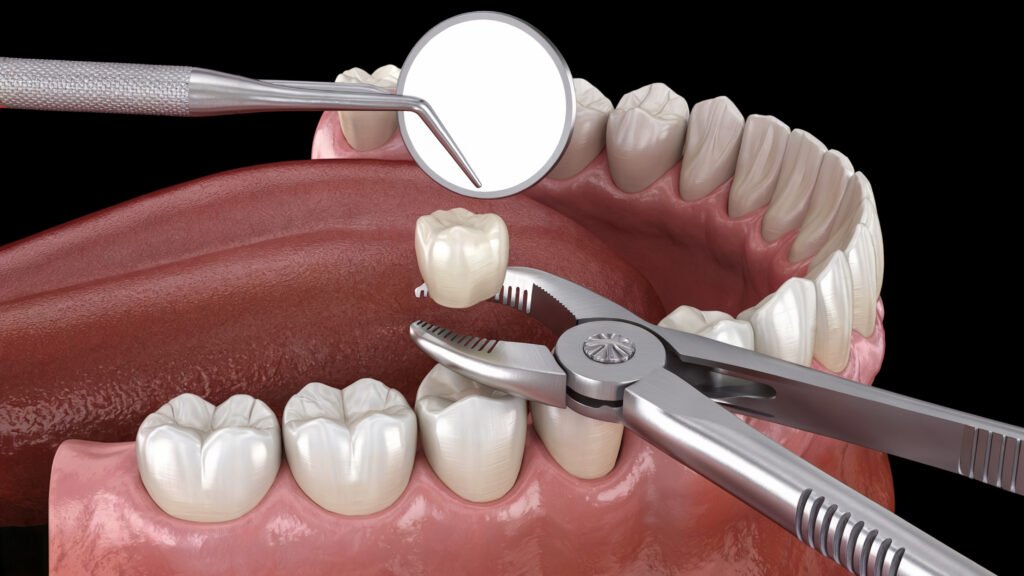
If your pain increases instead of decreasing a few days after a tooth extraction, contrary to your expectations, it may be a sign of a condition called dry socket. Also known as alveolitis, dry socket occurs when the clot that should form in the extraction site disappears prematurely, and with the right approach, it is both preventable and treatable. In this article, we will discuss the causes of dry socket, its symptoms, and when you should consult your dentist from a clinical perspective.
How does dry socket (alveolitis) develop?
After a tooth is extracted, a blood clot forms in the socket, the space left behind. This clot not only stops bleeding but also acts as a natural protective layer, shielding the underlying bone and nerve endings from external factors and forming the basis of healing. Dry socket develops when this clot dissolves prematurely, becomes dislodged, or fails to form adequately at all.
When the clot breaks, the underlying bone tissue and nerve endings are directly exposed to the oral environment, air, fluids, and food particles. This exposed surface is highly sensitive, and an inflammatory response begins. Dry socket is not so much an infection as a painful delay in healing due to the loss of the protective layer; however, the unprotected area can also predispose to secondary infection over time. It most commonly occurs after the extraction of lower wisdom teeth.
What are the symptoms?
The most typical characteristic of a dry socket is the timing of the pain. After a normal extraction, the pain is at its peak on the first day and gradually decreases in the following days. In a dry socket, however, the opposite is true: approximately 2-3 days after the extraction, the pain, which is expected to subside, suddenly intensifies. The following symptoms should suggest this condition:
- A throbbing pain that starts 2-3 days after the extraction and gradually increases in severity.
- Pain radiating to the ear, temple, eye, or neck.
- A bad odor in the mouth and an unpleasant, persistent taste.
- When the extraction site is examined, instead of a red clot, the socket appears empty, light-colored, or grayish.
- Failure to achieve the expected level of response to painkillers.
This condition may sometimes be accompanied by mild fatigue; however, high fever, significant swelling, and progressively increasing purulent discharge more likely indicate an established infection and must be evaluated.
Factors that increase risk
Dry socket implantation does not occur with the same probability in everyone; certain factors significantly increase the risk of clot dislodgement. One of the most important is smoking. Smoking slows healing by reducing blood flow to the tissues, and the sucking motion during smoking can dislodge the clot. A similar mechanism is at play when drinking through a straw; therefore, it is recommended to avoid using a straw in the first few days after extraction.
Other major factors that increase the risk include:
- Difficult or traumatic extractions, especially of impacted wisdom teeth.
- Vigorous shaking of the extraction site, spitting on it, or tampering with it with a finger or tongue.
- The use of cigarettes and tobacco products
- Poor oral hygiene or the presence of an active infection in the area prior to extraction.
- The use of medications containing estrogen, such as birth control pills.
- Having previously used a dry socket.
How to protect yourself from dry socket?
The most crucial factor in preventing dry socket is protecting the clot during the first 24-48 hours after extraction. During this period, any movement that might disturb the socket should be avoided. General post-extraction recommendations can be summarized as follows:
- Avoid rinsing your mouth, forcefully spitting, and using a straw on the first day.
- Try to quit smoking for as long as possible after the injection, preferably a few days.
- In the first few days, choose lukewarm, soft foods; avoid very hot and hard foods.
- After the period recommended by your doctor, usually starting the next day, gently gargle with lukewarm salt water.
- Continue brushing your teeth, but be careful not to touch the extraction site directly.
- Follow all prescribed medications and care instructions completely.
These simple measures significantly contribute to keeping the clot in place and ensuring a smooth healing process.
How is the treatment performed?
When dry socket develops, the primary goal of treatment is to quickly control the pain and get the healing process back on track. While this condition tends to resolve spontaneously over time, medical intervention is invaluable for relief, as the pain is often unbearable for many people.
Your doctor will first gently clean the extraction socket, removing accumulated food debris and inflamed tissue. Then, a special dressing or medical preparation is placed inside the socket to cover the exposed nerve endings, soothe pain, and promote healing. This dressing may need to be changed at regular intervals. Appropriate pain medication will be prescribed throughout the process; additional treatments may be planned if deemed necessary. After treatment begins, pain usually subsides significantly shortly afterward, and the area feels comfortable within a few days.
When should you consult a doctor?
Mild discomfort and gradually decreasing pain after extraction are expected. However, if your pain increases beyond the initial level, persists despite painkillers, or if you develop a persistent bad odor and taste in your mouth, you should consult your doctor immediately. Similarly, increasing swelling, high fever, or pus discharge from the extraction site are also warning signs that should not be delayed. Dry socket is a condition that can be relieved with a simple procedure if evaluated early; contacting your doctor is the best approach instead of ignoring the symptoms.
If you are experiencing increased pain after a tooth extraction in or around Kemerburgaz, Göktürk, Sarıyer, Arnavutköy, Bahçeköy, and Zekeriyaköy, scheduling an appointment promptly will facilitate your recovery.
Frequently Asked Questions
Will the dry socket fix itself?
It tends to heal over time, but since the pain is quite severe in most people, dressing changes done by a doctor significantly speed up and relieve the pain.
How many days after shooting does dry socket appear?
It usually manifests as a sudden increase in pain, which is expected to decrease 2-3 days after the extraction.
Does smoking really increase the risk of dry socket?
Yes. Smoking slows healing by reducing blood flow and can also dislodge a protective clot through the sucking motion while smoking.
What should I do to prevent dry socket?
In the first few days, avoiding rinsing your mouth, drinking through a straw, and smoking, not touching the affected area, and following your doctor's care instructions will provide the most effective protection.
To evaluate your post-exposure complaints. Kemerburgaz and its surroundings We can evaluate you at our clinic. You can contact us to schedule an appointment..