
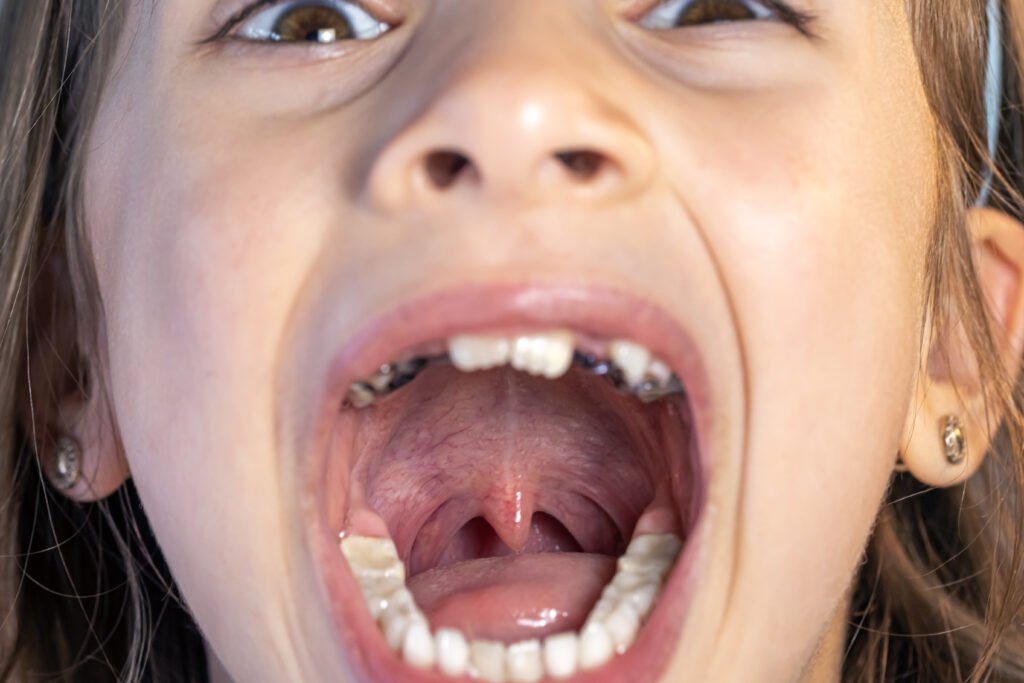
When a child's teeth start to come in slightly crooked, or they notice an anomaly in their bite, most parents' first question is the same: "Should we wait for braces, or should something be done now?" This question is more relevant than it seems; because in orthodontics, timing is as crucial as the treatment itself. In some cases, a little early intervention can make complex treatment later on entirely unnecessary. In other cases, rushing can unnecessarily prolong the process for the child. Knowing the difference is important for both the child's oral health and the family's time and budget.
The recommended age for the first orthodontic check-up is approximately 7 years old.
International orthodontic organizations recommend that every child undergo an orthodontic evaluation around the age of 7. This age is not chosen randomly. Around the age of 7, the first permanent molars and incisors begin to appear in the mouth. This gives the dentist the opportunity to assess how the jaws are growing in relation to each other, in which direction the bite is developing, and whether there is enough space in the mouth for the teeth.
The critical point here is that a check-up at age 7 doesn't mean "let's start treatment immediately." On the contrary, the vast majority of these examinations end with the conclusion, "everything is normal for now, let's monitor development." The goal isn't to rush treatment; it's to catch rare situations requiring early intervention in a timely manner. If the child regularly visits the dentist, this assessment can often be done as part of routine check-ups. This is also the most common misconception we correct in our discussions with families in Kemerburgaz, Göktürk, and the surrounding areas: the first orthodontic check-up isn't an appointment for fitting braces; it's an appointment to create a treatment plan.
The difference between early (first stage) and second stage treatment
Dividing pediatric orthodontics into two separate phases is the most practical way to avoid confusion. These two phases serve different purposes, and most children need only one, sometimes neither.
First stage (early/directive) treatment This procedure is generally performed between the ages of 7 and 10, during the mixed dentition period when both primary and permanent teeth are present. The goal of this stage is not to straighten individual teeth. The aim is to guide jaw development, widen a narrow upper jaw, correct misaligned jaw relationships, or create space for permanent teeth. Appliances used during this period are mostly devices such as palate expanders, space maintainers, or removable functional appliances. Because the child's growth potential is still high, it is much easier to address skeletal problems at this stage.
Second phase (comprehensive/fixed) treatment Dental aligners are generally applied after all permanent teeth have erupted, around age 11-13 and beyond. This is the stage that most people think of as "orthodontics": the period when teeth are precisely positioned using brackets and wires or clear aligners. Even a child who has undergone first-stage treatment may still need a short period of fixed treatment at this stage for fine adjustments to the teeth.
Why is it so important to distinguish between these two phases? Because a skeletal problem, such as a narrow upper jaw, is most easily resolved during the growth period. If the same problem is left until after adolescence, surgical options may become necessary instead of jaw widening. Therefore, the value of early treatment is not about "finishing it sooner," but about using the window of opportunity provided by growth at the right moment.
In which findings is early intervention truly necessary?
Early treatment is meaningful not for every child, but for children with specific findings. The following are the most common examples where a physician seriously considers early treatment:
- Crossbite: The upper teeth closing in on the lower teeth, especially when unilateral, can lead to a sideways shift in the jaw as it grows. This is one of the conditions most amenable to early intervention, as it can progress to facial asymmetry if left uncorrected.
- Narrow upper jaw (palate narrowing): In cases where the palate is too narrow and teeth don't fit, palate widening surgery performed during the growth period creates space for permanent teeth and may reduce the need for tooth extraction in the future.
- Severe anterior bite disorders: A condition where the upper front teeth are significantly forward (especially to the point of increasing the risk of trauma and fractures) or a reverse bite where the lower jaw overlaps the upper jaw, can benefit from growth guidance.
- Persistent oral habits: Thumb sucking, bottle feeding, tongue thrusting, or mouth breathing that continue after the age of 4-5 can cause open bite (the front teeth remaining open) and deformities in the palate structure. As long as these habits persist, no mechanical treatment will provide permanent results; the habit must be eliminated first.
- Early or late loss of primary teeth and suspected impacted teeth: A baby tooth falling out prematurely can cause neighboring teeth to close the gap; similarly, the failure of some permanent teeth to erupt at the expected time may be a sign of an impacted (misaligned) tooth. These issues are much easier to resolve if detected early with radiography.
These findings share a common theme: they all relate more to the functioning of the jaw and bite than to the aesthetics of the teeth. This is where the real power of early treatment lies; addressing the underlying structural problem in a timely manner, rather than just a minor apparent misalignment.
Not every child needs early treatment.
It is important to emphasize this point because one of the most common concerns among parents is the thought, "If we don't start early, we'll miss the opportunity." The truth is, for the vast majority of children, the correct approach is to wait and observe their development. Mild crowding, gaps between baby teeth, or seemingly temporary bite differences often resolve spontaneously as the jaw grows or are most effectively resolved with a single fixed treatment.
Unnecessary early treatment also has a cost: accustoming the child to wearing appliances for a long time, requiring a second treatment for the same problem in the future, and burdening the family with both time and money. A good orthodontic approach doesn't work with the mentality of "we have appliances, so let's use them," but rather with the question of "when can we achieve the best result with the least intervention for this child's problem?".
The practical summary is this: Have your child orthodontically evaluated once around the age of 7. The result will usually be "let's follow up," which is good news. If any of the findings listed above are present, your doctor will guide you on the correct timing. Not missing this evaluation is far more important than starting treatment early; because the real goal is to intervene at the right time, neither too early nor too late.
Frequently Asked Questions
At what age should I take my child for their first orthodontic check-up?
An orthodontic evaluation is recommended around age 7; at this age, the first permanent teeth begin to erupt, allowing for a reliable assessment of jaw and bite development. This check-up is not to initiate treatment, but to determine if treatment is needed.
Are early orthodontic treatment and braces the same thing?
No. Early (first-stage) treatment aims to guide jaw development and create space; this is usually done with palatal expanders or functional appliances. Orthodontic treatment, on the other hand, is a second-stage treatment that usually brings the teeth to their final position after the permanent teeth have erupted.
Does every child need early orthodontic treatment?
No. For most children, the correct approach is to monitor development. Early intervention is only necessary if there are specific findings such as crossbite, narrow upper jaw, significant malocclusions, or persistent sucking-tongue thrusting habits.
Does thumb sucking really damage teeth?
Yes, especially if it continues after the age of 4-5. Prolonged thumb sucking, bottle feeding, or tongue thrusting can lead to the front teeth remaining open and changes in the palate structure. In this case, it is recommended to first break the habit, and then, if necessary, an orthodontic evaluation.
For your child's first orthodontic check-up Göktürk and its surroundings We can evaluate you at our clinic. Smile Design You can get information about it or You can contact us to schedule an appointment..